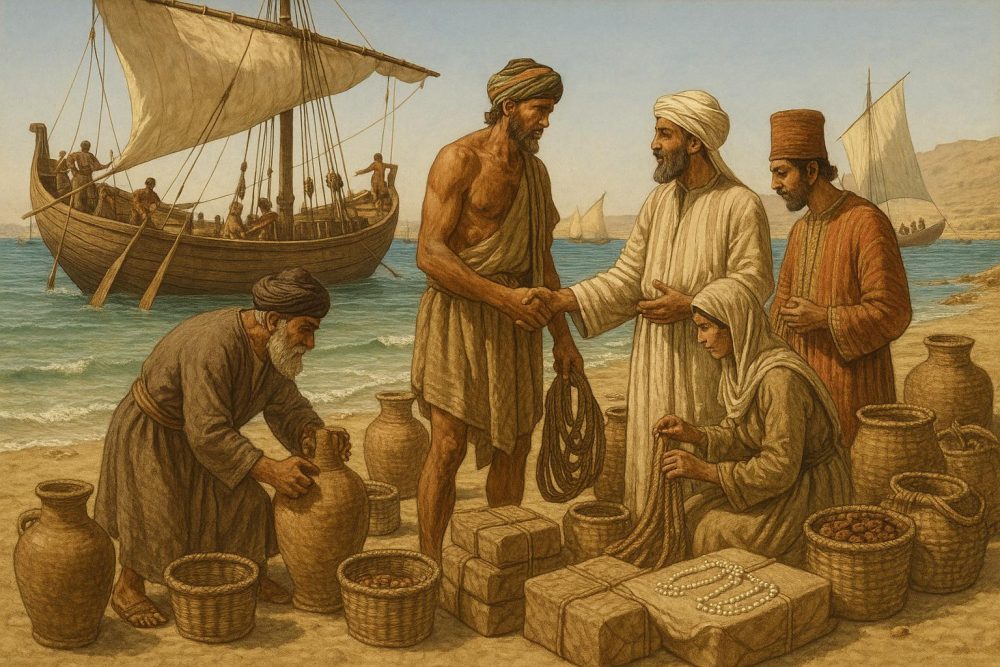
Introduction to Ancient Trading in the Persian Gulf
The Persian Gulf has long been a significant region for trade, linking different civilizations through a complex network of routes. This area served as a crucial hub in connecting the Mesopotamian, Indian, and Iranian worlds. Its strategic location facilitated the exchange of various goods, cultures, and ideas, contributing significantly to the economic and cultural developments of the ancient Near East.
The Role of Geography in Trade
The geography of the Persian Gulf played a pivotal role in its trading importance. This body of water lies between the Arabian Peninsula and Southwestern Iran, providing a maritime route that was far safer and faster than overland paths. The Gulf offered a natural corridor for ships traveling between the Indian subcontinent and the Mesopotamian plains.
The combination of the Tigris and Euphrates rivers draining into the Gulf and the winds suitable for travel using sails made it an attractive passage for maritime traders. Additionally, the shores of this region were rich in resources like bituminous substances, which were crucial for waterproofing ancient vessels.
Trade Goods and Materials
Trade within the Persian Gulf included a variety of goods that traversed the waters, facilitating interactions among diverse cultures. Some of the notable trade items included textiles, jewelry, spices, and ceramics.
The textile industry thrived, as silk and cotton, transported via Gulf trade routes, were highly valued. Patterns and techniques from different cultures enriched the textile arts.
Jewelry and Metals, such as precious stones, gold, and silver, were commonly exchanged, driven by the status and symbolic value of these items across civilizations. The craftsmanship of such pieces often reflected cultural influences acquired through trade.
Spices and Perfumes, originating from regions like India, were highly sought after for their rarity and exotic flavor. These goods not only added value to culinary practices but also influenced social and cultural practices.
Ceramics and Pottery transported through these trading lines ranged from utilitarian wares to artistic expressions, helping to spread techniques and styles between cultures.
The People Behind the Trade
Various ancient civilizations leveraged the Persian Gulf for their trading ambitions. The Sumerians, Babylonians, and later the Persians, all recognized the invaluable asset that controlling this key region presented. The accumulation of knowledge in navigation, shipbuilding, and trade logistics was crucial for their success.
Merchants, sailors, and local tribes played essential roles in exchanging goods. They were the backbone of commercial operations in the Gulf, fostering relations and establishing trustworthy trade networks. Their expertise in managing logistics was essential in maintaining the flow of goods and ensuring economic prosperity.
Furthermore, these individuals often engaged in diplomatic efforts with local rulers to guarantee safe passage for traders, highlighting the link between commerce and politics in the region.
Cultural and Economic Impact
The trade routes of the Persian Gulf not only facilitated economic exchanges but also enhanced cultural diffusion. The movement of goods allowed for a parallel exchange of ideas, languages, and technologies, leading to a significant impact on societies distant from the Gulf itself.
For instance, the spread of ideas contributed to advancements in areas such as writing and mathematics. The Mesopotamian cuneiform script, one of the earliest systems of writing, may have disseminated through trade interactions, promoting literacy and record-keeping across regions.
Economically, the wealth generated from trade was instrumental in the development and prosperity of cities and states within the Mesopotamian region. This wealth allowed for investment in monumental architecture, enriching artistic endeavors, and financing ambitious military campaigns.
Civic development and infrastructure were frequently funded by revenues from trade, enabling the creation of more advanced urban centers. These improvements in infrastructure further emphasized the economic capabilities of states participating in trade through the Persian Gulf.
The intermingling of cultures facilitated by maritime trade fostered an environment where innovations and cultural practices were shared and adapted, influencing everything from governance structures to religious beliefs.
Moreover, the blend of diverse peoples and ideas promoted the region as a melting pot of cultural diversity, where new societal norms often emerged. The cultural synthesis manifested in a variety of domains including language, attire, and even culinary practices, with each culture contributing to a dynamic, evolving entity.
Learn more about trading history in the Persian Gulf to delve deeper into this fascinating subject.