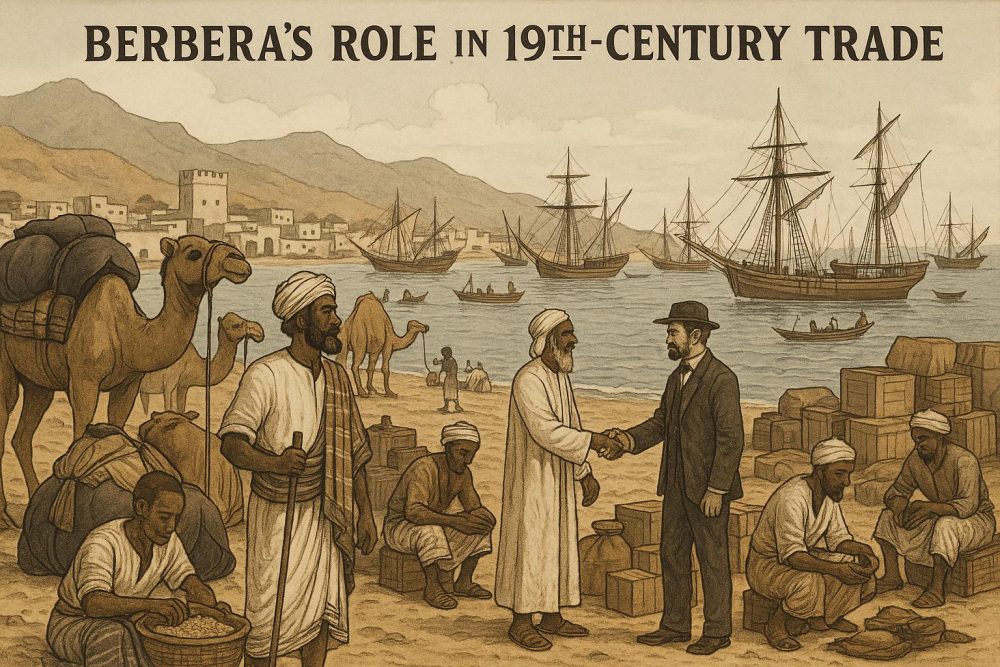
Historical Context of Berbera’s Trade in the 19th Century
In the 19th century, the coastal city of Berbera emerged as a pivotal trade hub in the Horn of Africa. Situated along the southern shore of the Gulf of Aden, Berbera became an essential port for both regional and international commerce. Its strategic location rendered it a significant node along trade routes that connected the Arabian Peninsula, East Africa, and the broader Indian Ocean region. This position facilitated the movement of goods, people, and cultures, forging economic and cultural links that reverberated far beyond the immediate region.
Berbera’s Intercontinental Trade
Berbera’s proximity to the Arabian Peninsula afforded it a distinctive edge in fostering intercontinental trade. The city’s access to maritime traders from the Middle East made it a vibrant center of commerce. Seasonal fairs were a hallmark of Berbera’s trading schedule, drawing merchants from various regions who engaged in the exchange of a diverse array of goods. These fairs were a bustling testament to the market’s vibrancy, bridging economic and cultural exchanges across continents.
Goods Traded through Berbera
A variety of commodities passed through Berbera, bolstering its reputation as a central trade locale. Notable goods included:
Frankincense and Myrrh: Among the most famous products traded were aromatic resins like frankincense and myrrh. These substances, highly prized in the Middle East and Europe for their fragrant and medicinal properties, were funneled from the hinterlands through Berbera to international destinations.
Ivory and Animal Products: Ivory, hides, and livestock sourced from the African interior were equally significant trade components. These products reflected the ecological richness of the region and were in high demand across markets.
Textiles and Manufactured Goods: In exchange, goods like textiles and various manufactured items from India and the Far East made their way into African markets via Berbera. These commodities played a key role in enriching the material culture and economic framework of the surrounding regions.
Economic and Political Significance
The prosperity witnessed during Berbera’s trade fairs attracted the attention of travelers and diplomats, highlighting the city’s economic vitality. Such prosperity was not confined to Berbera alone; it sparked a ripple effect of economic activity in the surrounding areas. Consequently, Berbera became an area of interest for several colonial powers, most notably the British Empire, which aimed to control vital trade routes and resources stemming from the region.
British Influence
The British were quick to recognize the strategic and economic importance of Berbera. Through treaties with local leaders, they sought to assert their influence and establish a presence in the region. This was primarily driven by their desire to secure maritime routes essential for imperial trade and to harness the wealth of goods that Berbera offered. Throughout the 19th century, Berbera was thus not just a trade hub but a focal point of imperial ambitions, which in turn influenced its infrastructure and political dynamics.
Berbera in the Larger Trade Networks
Berbera was intricately woven into the larger trade networks that stretched across the Indian Ocean. It served as a crucial connecting point between the Swahili Coast, the Arabian Peninsula, and the Indian subcontinent. This connectivity enhanced the flow of goods, culture, and people, making Berbera not only a trade center but also a cultural melting pot.
Legacy and Historical Perspectives
The historical significance of Berbera offers valuable insights into the economic patterns and political narratives of the 19th-century Horn of Africa. The trade legacies fostered by Berbera helped lay the foundations for its contemporary socio-economic dynamics. Understanding Berbera’s historical role provides a lens to appreciate the complex interactions between Africa and its neighboring regions during a critical era in global trade history.
For those inclined to explore more about Berbera’s historical milieu and its implications on regional trade, further reading might include delving into academic journals focusing on historical commerce or exploring resources from cultural heritage institutions. These sources can offer a rich array of perspectives on how Berbera’s trading past influenced economic and cultural developments across the Horn of Africa and beyond.