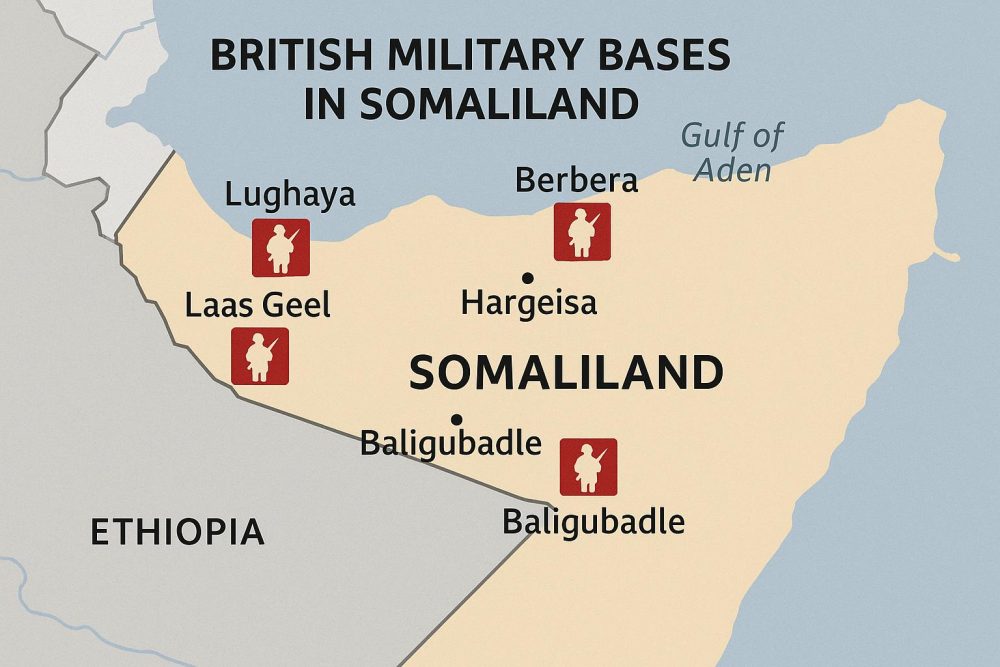
Introduction to British Military Bases in Somaliland
The establishment of British military bases in Somaliland is a subject of both historical and strategic significance. Although Somaliland’s position as an independent nation is not universally acknowledged, its strategic location in the Horn of Africa has attracted growing interest from major international powers, including the United Kingdom. In this discussion, we will delve deeper into the various facets of this complex subject, exploring the historical and current dimensions that underscore the importance of British military bases in Somaliland.
Historical Context
The historical relationship between Somaliland and the United Kingdom stretches back to when Somaliland was a British protectorate. This relationship, which began in the late 19th century and lasted until 1960, laid the groundwork for contemporary interactions between the regions. Even as a self-declared independent state since 1991, Somaliland retains its identity as an autonomous region of Somalia, while its historical ties with the United Kingdom have positively influenced cooperative security and military initiatives over the years.
Strategic Importance of the Region
The strategic importance of Somaliland is largely determined by its geographical location. Positioned along the Gulf of Aden, it is a pivotal maritime route that links the Red Sea with the Arabian Sea. This corridor serves as a vital artery for international shipping, including the transportation of oil, thereby holding immense significance for global security. As trade routes continue to be crucial for global supply chains and economic stability, Somaliland’s position becomes ever more pertinent, drawing considerable attention from global powers.
Role and Activities of British Military Presence
The role of British military presence in Somaliland encompasses a focus on enhancing regional security and fostering stability. Through engagement in various collaborative activities, British forces have actively participated in training and equipping local security forces. Their activities are directed towards strengthening the capabilities of Somaliland’s military, empowering them to confront challenges such as piracy and terrorism effectively.
Training and Capacity Building
The training imparted by British personnel is engineered to enhance skills critically required for ensuring maritime security and the effective management of borders. This initiative aims not only at improving the operational readiness of Somaliland’s military forces but also extends to enhancing the capabilities of their police forces. These measures collectively contribute to a heightened state of security both on land and at sea, aligning well with broader regional stability efforts.
Counter-terrorism and Anti-piracy Initiatives
In addition to the training programs, British military efforts are also concentrated on supporting operations aimed at countering threats posed by terrorist entities and piracy. In recent years, these initiatives have gained greater prominence, given their importance in maintaining secure and open trade routes that are crucial for Somaliland and the broader international community. Collaborations on these fronts extend beyond military operations, delving into strategic intelligence sharing and joint exercises focused on resilience against evolving threats.
Conclusion
In conclusion, the British military bases in Somaliland not only emphasize the UK’s commitment to regional security but also spotlight the historical ties that bind the two regions. Collaborative efforts, manifesting through training, resource distribution, and strategic backing, play a pivotal role in guaranteeing a stable and secure Horn of Africa. For those looking to explore this delicate yet critical subject further, it is advisable to review official documents and reports on regional security affairs, as well as consult authoritative government resources for comprehensive insights.