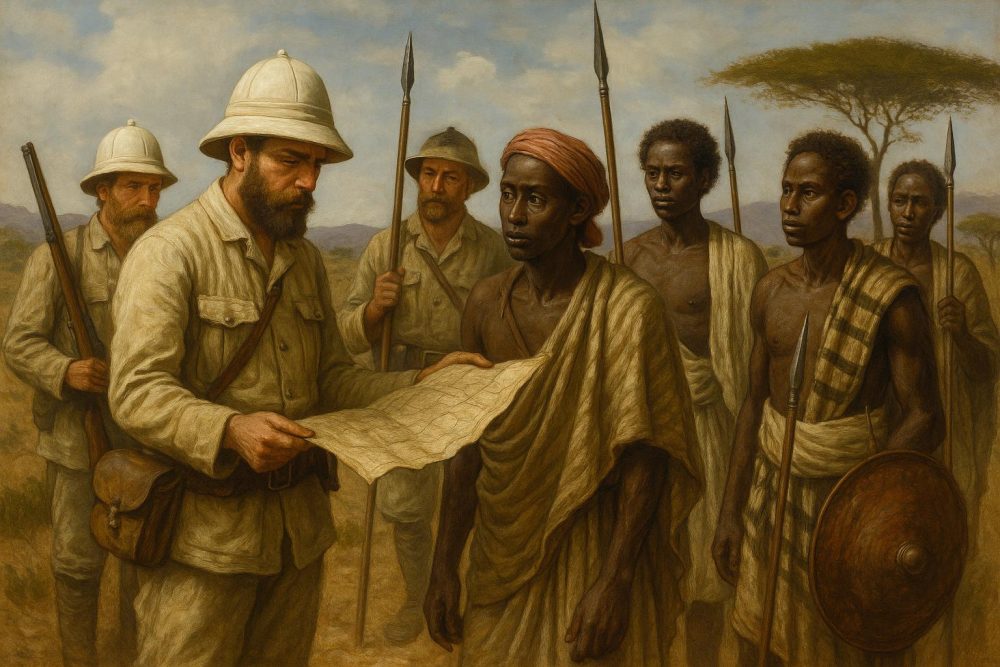
Introduction to European Exploration in Somaliland
The exploration of Somaliland by Europeans dates back to the late 19th and early 20th centuries, during a period known as the Scramble for Africa. This era was marked by European powers’ increased interest in African territories, driven by economic ambitions, geopolitical strategies, and scientific curiosity. Somaliland, lying strategically on the Horn of Africa, garnered attention due to its location along major trade routes and its potential as a colonial outpost.
Early European Interests
Prior to the Scramble for Africa, Somali coastal areas had already been in contact with various outside powers through trade. The influence of Arabia, Persia, and Indian merchants was predominant, until Europeans began to show interest in the region. The Portuguese were among the first Europeans to explore the Somaliland coast, albeit their presence was limited.
In the mid-1800s, the British, French, and Italians began asserting their influence. British interests were largely driven by the strategic port of Aden, situated directly across the Gulf of Aden from Somaliland. The French had similar ambitions, eventually establishing themselves in Djibouti.
Exploration and Mapping Efforts
During the late 19th century, several explorers embarked on missions to map and understand the interior of Somaliland. The harsh terrain and climate posed significant challenges, yet the lure of potential resources and strategic advantages motivated these endeavors.
One notable figure was Sir Richard Burton, an English explorer, who embarked on a mission to explore the Somali coast in the 1850s. His journey provided one of the first detailed maps and descriptions of the region, although his interactions with local populations were often tense.
Diverse Motivations for European Interest
European interest in Somaliland was fueled by diverse motivations. Economic prospects played a significant role, as the Europeans were keen on exploring potential markets and resources. In particular, the fertile land and the possibility of mineral wealth in Somaliland were alluring. Furthermore, the region’s strategic position made it an ideal location for controlling trade routes and projecting influence across the Horn of Africa and beyond.
Alongside economic interests, scientific curiosities motivated many explorations. European naturalists and geographers were eager to document the diverse flora and fauna of this relatively unknown region. Their efforts contributed to the understanding of the ecological diversity present in Somaliland, mapping out areas that had previously been uncharted.
Colonial Implications and Conflicts
The division of Somali territories among European powers had far-reaching consequences. The British, French, and Italians each established zones of influence, often without regard to the intricate local clan structures and historical claims to land. This arbitrary division led to longstanding issues that have impacted the region well into the modern era.
In particular, British Somaliland was established as a protectorate in 1884, following treaties with various Somali clans. Meanwhile, the French consolidated their hold on present-day Djibouti, and the Italians established their colony in the southern part of the region, known as Italian Somaliland.
Long-term Effects of European Exploration
The impact of European exploration and subsequent colonialism in Somaliland is multifaceted. Socially, the introduction of European governance systems disrupted traditional clan-based structures, creating tension and conflict that have echoed through generations. Economically, while some infrastructure developments were made, the exploitative nature of colonial resource extraction left the region with limited long-term benefits.
Politically, the boundaries drawn during the colonial period set the stage for future conflicts. The disregard for cultural and ethnic considerations when demarcating territories contributed to disputes that have persisted beyond decolonization. These issues continue to influence political relationships in the Horn of Africa.
Conclusion
The European exploration of Somaliland was a complex process driven by a mix of economic pursuits and strategic objectives. While it opened up the region to the outside world, it also laid the groundwork for future political and social challenges. Understanding this history is crucial for comprehending the current dynamics within the region.
For further reading, explore more on African colonial history through reliable online scholarly resources and publications. Engaging with diverse sources can provide a broader perspective on the complex legacy of European exploration and colonialism in Africa.