Contents
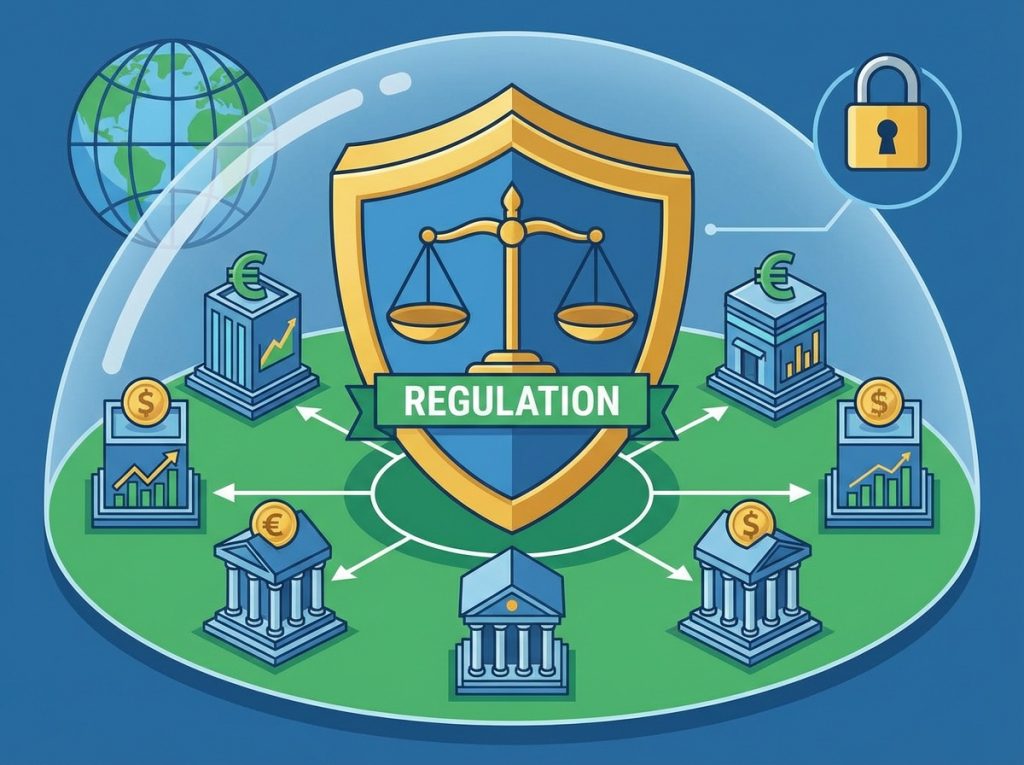
Somaliland has mobile money, a central bank, and a population that already uses digital payment rails for everyday commerce. Yet retail forex activity, the buying and selling of currencies for profit or hedging, mostly happens through offshore platforms and informal channels. That creates counterparty risk, gaps in consumer protection and missed opportunities for financial sector development. Kenya’s stepped approach to online foreign exchange regulation offers practical design choices Somaliland can adapt: clear licensing rules, mandatory disclosures, payment-rail integration, active supervision and consumer warnings that make it harder for unauthorised operators to hide behind technicalities. The rest of this article explains the current Somaliland landscape, what Kenya did that matters, and a pragmatic roadmap Somaliland regulators could follow to build a safer market for traders while avoiding the common pitfalls of rushed rulemaking.
Where Somaliland starts today
Somaliland already has functioning financial actors: a central bank, commercial banks and several widely used mobile money services such as Telesom’s ZAAD and other mobile wallets that today carry most day to day cash flows. In practice most active retail traders in Somaliland use offshore brokers accessed via the internet, or trade through informal local arrangements. That pattern exposes local traders to foreign counterparty risk, limited redress if things go wrong, and the operational friction of moving funds through international payment chains. There is also evidence from regional studies and press reporting that Somalia more broadly lacks a comprehensive, well enforced regulatory framework for retail online forex activity; enforcement actions in neighbouring markets show what can happen when authorities are absent or slow to act. These starting conditions mean Somaliland can prioritise clarity and local payment integration as the two fastest levers for improving safety.
What Kenya did that matters (the components worth copying)
Kenya has created robust rules with well-defined parameters for online Forex trading. The rules create clear responsibilities for any Forex platform that wants a license to operate in Kenya and include trade protection schemes such as client fund separation. Kenya also maintain a list of the CMA Authorized forex brokers.
The approach did three things that are especially useful for Somaliland to consider. First, it defined licensing categories and required authorised entities to publish clear client protections and reporting. Second, the regulator actively published warnings and required unlicensed operators to stop onboarding local clients, which put banks and payment processors on notice and raised the operational cost of servicing unauthorised firms. Third, Kenya’s market is tightly coupled with efficient local payment rails such as M Pesa and merchant APIs, which reduces settlement friction for deposits and withdrawals and therefore reduces operational risk for retail customers. These three levers, a clear licence regime, public enforcement signals and native integration with mobile payments, are a compact policy toolset Somaliland can adapt.
A practical regulatory design for Somaliland
Design a single, readable instrument that sets the perimeter for online forex activity rather than scattering rules across dozens of unrelated statutes. The central bank or a single designated financial supervisor should publish: who needs a licence, which activities are permitted to residents, minimum operational standards, and concrete consumer protections. Licensing can be tiered. A lightweight non dealing licence can allow firms to provide price discovery and education, a dealing online foreign exchange broker licence should be required for entities that accept client funds and provide leveraged execution, and a money manager licence for portfolio management services such as pooled accounts or managed allocations. Each licence class should carry proportionate requirements on capital, governance and reporting. The Kenyan model of explicit online forex regulations and licensing schedules shows this is feasible and enforceable. Clear rules reduce legal ambiguity and make enforcement administrative rather than ad hoc.
Payment rails and mobile money integration — use ZAAD as the local pivot
One practical advantage Somaliland holds is a mature domestic mobile money ecosystem centered on ZAAD and other wallet providers. Rather than forcing traders to use slow SWIFT transfers or expensive correspondent channels, the regulator should require licensed brokers to integrate with licensed mobile money providers for on ramps and off ramps for small and medium retail flows. Integration options include direct merchant APIs, designated paybills or similar merchant accounts, and formal partnerships with mobile money operators that guarantee liquidity for e money float. Requiring brokers to support local wallet payouts for withdrawals closes a major friction that currently drives users to risky intermediaries. Kenya’s use of M Pesa merchant APIs to shorten cash cycles is the practical template; Somaliland should adapt the same technical architecture to ZAAD or the appropriate local wallet, but with a supervisory check that e money float is properly backed and reconciled. Evidence from Somaliland’s own mobile money case studies shows ZAAD already moves large volumes and could be the backbone of a regulated retail forex funding model.
Client protections and market integrity — concrete minimums
Regulators should mandate core consumer safeguards that are simple to audit. These include client money segregation in identified custodial accounts at licensed local banks, transparent margin and finance charge disclosures, mandatory negative balance protection for retail accounts where feasible, periodic audited statements and a minimum level of free, local language customer support during business hours. Require brokers to publish an execution policy and an annual report on client fund treatment and operational resilience. Kenya’s rules require annual reporting and specific disclosures for online foreign exchange firms; Somaliland should mirror that spirit. In addition, a public registry of licensed entities and a list of unauthorised operators maintained on the regulator’s website are cheap and effective tools to reduce consumer harm.
AML, KYC and the payments chain — make the payment partner accountable
The payments chain in Somaliland will inevitably involve mobile money providers, banks and possibly international remitters. Regulators must place explicit AML and KYC obligations not only on brokers but also on the payment partners that carry client flows. That means mobile money operators must maintain auditable float backing for e money liabilities, keep transaction records that enable quick reconciliation with broker records and implement transaction monitoring tuned to forex flows, repeated high frequency deposits and rapid outbound FX conversions are legitimate risk markers. GSMA guidance and recent industry practice stress parity between e money liabilities and liquid reserves; Somaliland should require the same principle for wallet partners used by licensed brokers. By enforcing chain responsibility the regulator avoids the common loophole where an unregulated payment partner becomes the weak link in customer protection.
Supervisory tools and enforcement tactics that work
Kenya’s experience shows a handful of practical supervisory tools produce outsized effects. First, publish and update a list of unauthorised online forex operators and notify domestic banks and mobile money providers to block or flag suspicious flows. Second, use administrative penalties and licence revocation for systematic breaches rather than relying solely on criminal prosecution which is slower. Third, operate a regulatory sandbox that lets fintechs and brokers trial new products under conditions and data reporting obligations. Fourth, run public consumer awareness campaigns so retail clients can spot common fraud patterns. These measures are easier to implement and communicate than grand legislative rewrites and they create real operational friction for bad actors trying to serve domestic clients without licences. Somaliland should adopt a staged enforcement playbook that begins with public warnings and escalates to account freezes and asset attachment only when there is evidence of fraud or laundering.
Market infrastructure: clearing, settlement and currency specifics
Kenya benefits from well integrated clearing and settlement rails and a robust commercial banking sector that can custody segregated funds. Somaliland will need to make choices that match its scale. Insistence on local custody of client funds in licensed institutions provides a clear enforcement lever. For settlement of cross border flows, permit licensed brokers to maintain designated foreign currency settlement accounts with correspondent banks, but require advance notification and AML checks for large transfers. Where practical, encourage brokers to net client flows locally and use mobile money rails for most retail payments to reduce FX settlement frequency and costs. This approach reduces reliance on costly correspondent banking for small retail flows and makes supervisory monitoring simpler.
Capacity building and the human factor
A credible regime needs trained supervisors and a practical toolkit for examinations and market surveillance. Somaliland should invest in a small specialist unit within the central bank or regulator focused on online trading and fintech. That unit’s tasks should include periodic on site inspections, technical assessments of payment integrations, review of execution quality reports and cooperation with telecom regulators. Partnerships with regional regulators, donor funded technical assistance and use of a regulatory sandbox will accelerate capacity building while avoiding premature large scale licensing that can outpace supervisory resources.
Consumer education and industry collaboration
Making a safe market is not just rules. Kenya’s model paired regulation with investor education and a public dialogue that made consumers less likely to fall for dubious marketing. Somaliland should run plain language campaigns that explain which platforms are licensed, how to check the public registry, the importance of keeping transaction receipts and how to report suspected fraud. Encourage the formation of an industry working group, brokers, banks, mobile money operators and the regulator, to agree minimum operational standards and friction reducing protocols for KYC and dispute resolution.
Cross border issues, political recognition and correspondent banking risks
Somaliland’s international status complicates correspondent banking relationships and cross border legal remedies. Practical policy must acknowledge that some enforcement tools — extradition, cross border asset recovery, will be harder to execute. That makes prevention and domestic containment more important. Tight onboarding rules, robust AML checks, and mandatory local custody of client funds reduce the exposure created by limited cross border enforcement options. Where necessary, use contractual clauses that specify dispute resolution forums and keep the bulk of retail client cash within domestic custodian arrangements to avoid funds being trapped offshore. Regional cooperation with neighbouring regulators on information sharing and joint alerts can help, even if full legal cooperation is limited. Use the fact that mobile money operators already handle cross border remittances to negotiate technical solutions that limit exposure to opaque correspondent chains.
Risks and mitigation
The main risks are capacity constraints, capture by incumbents, regulatory arbitrage and disruption to correspondent banking. Mitigate these by keeping rules simple, using automated reporting to reduce supervisory burden, consulting industry participants early to reduce pushback and making licensing conditional on demonstrable technical integrations rather than promises. Where possible, adopt internationally recognised standards for AML and e money safeguarding so technical partners and correspondent banks can more easily assess compliance.
Conclusion
Somaliland does not need to reinvent the wheel. Kenya’s targeted effort to regulate online forex, coupled with operational integration into mobile money rails, shows a compact and effective policy toolkit: define the perimeter, require credible local custody, make payment rails safe and auditable and use public warnings plus proportionate enforcement to raise the cost of operating without a licence. Somaliland’s existing mobile money infrastructure gives it an immediate technical advantage, a local ZAAD integrated funding model can shorten cash cycles and materially improve consumer protection. With a staged rollout, modest capital and reporting requirements, and a focused supervisory unit, Somaliland can create a safer, more transparent retail forex market that protects traders, brings activity into the formal economy and reduces exposure to offshore counterparty risk.