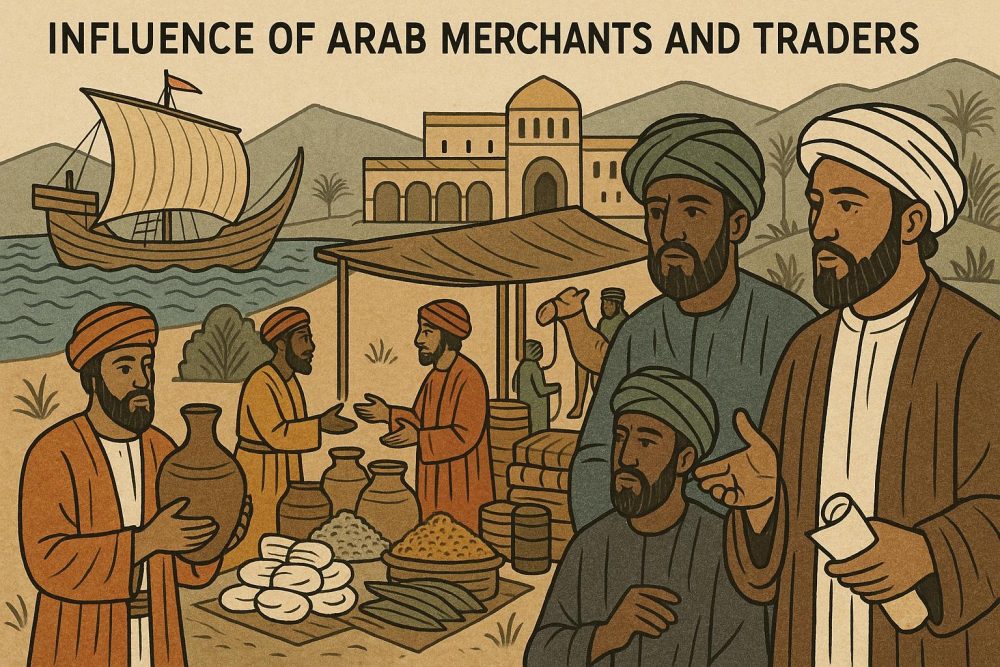
Introduction to the Influence of Arab Merchants and Traders
Arab merchants and traders have played a pivotal role in shaping global trade and cultural exchange for centuries. These skilled navigators and negotiators facilitated the movement of goods, ideas, and cultural practices across vast regions, from the Middle East to Europe, Asia, and Africa. Understanding their influence provides valuable insights into the historical development of commerce and globalization.
Historical Context
During the Islamic Golden Age, roughly spanning the 8th to the 14th centuries, Arab traders emerged as prominent figures. This era was marked by significant advancements in various fields, including science, technology, and trade. The geographical location of the Arab world, situated at the crossroads of Asia, Africa, and Europe, bestowed a strategic advantage for merchants keen on exploring new markets and resources. As a civilization, the Arabs were adept at both land and maritime navigation, utilizing these skills to establish and expand trade networks that would last for centuries.
Trade Routes and Networks
Arab merchants played a crucial role in the development and maintenance of extensive trade routes that crisscrossed continents. Among the most renowned trading networks was the Silk Road, which linked China to the Mediterranean. This ancient network allowed for the transfer of luxury goods and facilitated significant cultural exchanges between the East and the West, enabling transformative interactions that shaped the course of history.
In addition to the land routes, the Arabs were also instrumental in maritime trade through the Indian Ocean. Their ships linked the Middle East with India, Southeast Asia, and the Swahili Coast in East Africa. These maritime routes facilitated the exchange of goods and ideas over vast distances, creating a web of trade connections that would inspire later generations of navigators and explorers.
Commodities and Goods
One of the defining features of Arab trade was their wide array of sought-after commodities, which captivated foreign markets.
Spices: Arab merchants controlled the spice trade, distributing exotic spices such as cinnamon, pepper, and ginger. These spices were in high demand in Europe, where they were used for culinary, medicinal, and preservative purposes. This trade not only heightened the culinary diversity of the regions involved but also contributed to the wealth and prominence of Arab merchants in the global market.
Textiles: The Middle East was a center for textile production, particularly the manufacturing of silks, cottons, and woven fabrics. These goods influenced fashion and textile manufacturing across Europe and Asia. The renowned quality and design of Arab textiles made them highly prized, and the exchange of textile techniques played a significant role in the evolution of the industry worldwide.
Metals and Minerals: Arab traders were also pivotal in the trade of precious metals like gold and silver, alongside other materials such as ivory and pearls. These commodities were integral to the economies of the regions involved, fueling artistic and architectural advancements during this period.
Cultural and Intellectual Exchange
Apart from tangible goods, Arab merchants were key facilitators of cultural and intellectual interactions. The movement of these traders across diverse regions allowed for the spread of knowledge in areas such as astronomy, mathematics, and medicine. Their contributions to the European Renaissance cannot be overlooked, as they introduced Europeans to many scientific principles and texts. The Arabs were instrumental in the dissemination of the concept of the number zero and the decimal system, which significantly revolutionized Western mathematics and science.
Impact on Local Economies and Societies
The effects of Arab traders on local economies and societies were multifaceted. Their presence in different regions contributed to the development of urban centers and market towns. Cities such as Cairo, Baghdad, and Damascus emerged as vibrant trade hubs as a result of this economic activity. These cities became melting pots of culture and commerce, fostering environments conducive to intellectual growth and cultural diversity.
Arab merchants often integrated into local societies, marrying locally and blending cultures. This cultural exchange enriched the social fabric of the regions they touched, leading to the formation of new communities that carried forward the legacy of intercultural dialogue and cooperation. The influence of Arab culture and commerce remained deeply rooted in these societies long after the traders had moved on, evidencing the lasting impact of their presence.
Conclusion
The influence of Arab merchants and traders is a testament to the interconnectedness of ancient and medieval societies. Their ability to navigate complex trade networks and various cultures underscores the importance of trade in shaping world history. Through their efforts, we see the threads of commerce and culture interwoven in a historical tapestry that extends into the present. Understanding their contributions offers a more comprehensive appreciation of the global economic and cultural landscape that exists today. For those interested in delving deeper into this topic, exploring scholarly resources and historical analyses on trade during the Islamic Golden Age is recommended for a richer understanding of this influential period.