“`html
Introduction to Somaliland
Somaliland is a self-declared state, internationally regarded as an autonomous region of Somalia. Despite not being widely recognized by the international community, Somaliland functions as a de facto independent nation complete with its own government, flag, currency, and various state institutions. Since declaring independence in 1991, Somaliland has been striving to gain global recognition and has been actively engaging in diplomatic activities to establish relationships with other nations and international organizations. This article offers an expanded look into Somaliland, providing a comprehensive overview of its historical context, key agreements, challenges, and future prospects.
Historical Context
The quest for international recognition by Somaliland is deeply rooted in the complex and multifaceted history of the Horn of Africa. Originally a British protectorate, Somaliland gained independence as the State of Somaliland on June 26, 1960. Shortly thereafter, it entered into a voluntary union with the former Italian-administered Trust Territory of Somalia on July 1, 1960, to form the Somali Republic. However, the union quickly encountered challenges, primarily due to dissatisfaction with centralized governance from Mogadishu and escalating civil conflict. These issues culminated in Somaliland’s declaration of independence in 1991 following the disintegration of Somalia’s central government.
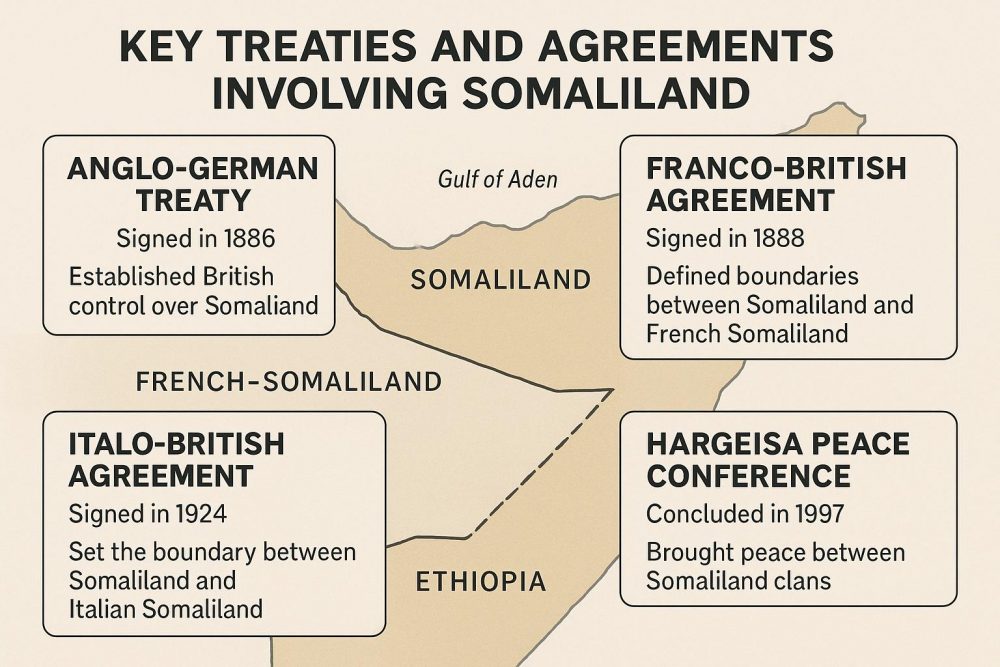
Key Treaties and Agreements Involving Somaliland
Somaliland’s ambition to engage with the world stage includes several significant treaties and agreements that have marked its pursuit of statehood and peaceful integration into the international community.
Somaliland Peace Charter
This crucial document was signed in the early 1990s and played a vital role in establishing internal stability within Somaliland. The charter facilitated reconciliation among the various clans and sub-clans within the region, thereby creating a foundation for a peaceful and stable society. This internal arrangement stands in stark contrast to the persistent turmoil in Somalia’s southern regions, highlighting Somaliland’s successful efforts in conflict resolution and governance.
Somaliland Constitution
Another pivotal moment in Somaliland’s history was the approval of its constitution by public referendum in 2001. This document serves as a cornerstone, asserting Somaliland’s independence from Somalia and defining its governance framework. Emphasizing democracy, free elections, and the rule of law, the constitution underpins both Somaliland’s internal policies and international engagement strategies. The focus on democratic principles has fostered political stability and facilitated Somaliland’s engagements with international partners.
Somaliland-Kenya Agreement
Although not a formal treaty, the Somaliland-Kenya agreement initiated in the 2010s represents a series of diplomatic interactions aimed at strengthening bilateral relations. These engagements have revolved around discussions on trade, security cooperation, and joint efforts to counter regional terrorism. The cooperative dialogue between Somaliland and Kenya illustrates Somaliland’s broader strategy of building diplomatic ties with key regional players to enhance its foreign relations portfolio.
Challenges and Future Prospects
Despite possessing a structured governance system and relative internal stability, Somaliland confronts significant challenges in its quest for international recognition. A primary hindrance emerges from the African Union and United Nations’ general commitment to uphold the sovereignty and territorial integrity of existing states. This approach complicates Somaliland’s aspirations for widespread secession recognition. Nevertheless, Somaliland continues to pursue diplomacy and pragmatic agreements as it endeavors to substantiate its claim to independence.
The geopolitical landscape of the Horn of Africa is constantly evolving, and these dynamics may impact Somaliland’s chances for official recognition. The successful establishment of effective governance and enduring peace in Somaliland strengthens its position on the international stage. However, the journey toward recognition remains intricate and closely entwined with Somalia’s broader regional dynamics.
For those interested in exploring Somaliland’s treaties and agreements further, various governmental and academic resources offer extensive information that delves into the specifics of these diplomatic endeavors.
Social and Economic Development
Beyond its political pursuits, Somaliland has been working towards fostering social and economic development within its borders. The region has managed to create economic stability, partly attributed to a vibrant private sector and remittances from the Somaliland diaspora. The nation’s commitment to education and health sectors also demonstrates its focus on building infrastructure that can support broader economic activities.
The burgeoning telecommunications industry and livestock exports contribute significantly to the economy, while investments in infrastructure projects such as ports and roads indicate attempts to further improve its economic landscape. By focusing on these development activities, Somaliland aims to create a favorable environment for investment and economic growth.
Engagement with the Diaspora
The Somaliland diaspora plays a crucial role in the region’s development and international advocacy. The diaspora community not only sends vital remittances that bolster the local economy but also actively participates in political, social, and economic life. Many Somalilanders living abroad act as unofficial ambassadors for the region, raising awareness about Somaliland’s quest for recognition and contributing to its development through knowledge transfer and investment. This engagement highlights the significant role that the diaspora can play in supporting an unrecognized state’s progress and visibility on the global stage.
In conclusion, Somaliland is a unique case in the international arena, possessing a mix of historical, political, economic, and social elements that shape its narrative. Whether it will gain official recognition remains an open question, heavily dependent on regional dynamics, international politics, and its ability to maintain stability while engaging diplomatically with the world.
“`