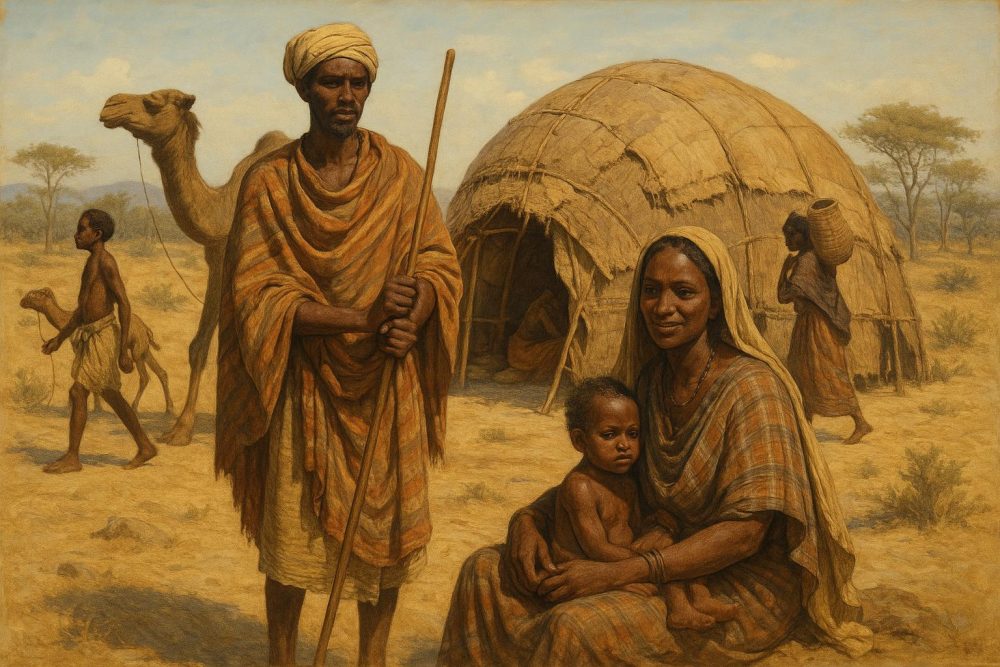
Overview of Nomadic Lifestyles in Pre-Colonial Somaliland
In pre-colonial Somaliland, the dominating form of lifestyle was nomadism, characterized by a population that primarily engaged in pastoralism. This way of life was heavily dependent on the seasonal movement of livestock to access water and pasture. The dynamic environment and climatic conditions shaped the economic, social, and cultural practices of the people.
Economic Practices
The primary economic activity was herding, with camels, sheep, goats, and cattle being the most common livestock. The reliance on these animals was not just for sustenance but also represented wealth and social status within the community. Trade was another significant aspect of the economy, with goods such as animal products, including milk and meat, being exchanged with neighboring regions and inland communities for other necessities like grains and tools. Visit this link to learn more about the role of trade in the region.
Herders in pre-colonial Somaliland developed an intricate understanding of livestock, which was key to their way of life. Camels were especially valued, as they could carry heavy loads over long distances and survive with little water. This trait made them ideal for long journeys across the arid landscape. As a result, the camel often symbolized prosperity and opulence, and it occupied a central position in economic rituals.
Moreover, the exchange and trade systems extended beyond mere barter transactions. Social and economic ties with neighboring communities were solidified through trade agreements and alliances, ensuring a steady supply of goods and mitigating the risks of resource scarcity. Trade caravans traversed challenging terrains, linking the Somali nomads with broader commercial networks in the Horn of Africa, the Arabian Peninsula, and beyond.
Social Structures
Social structures within nomadic communities were highly tribal and clan-based. Clans played a pivotal role in maintaining social cohesion and providing protection. Decisions were often made through communal gatherings, and elder members held authority owing to their experience and wisdom. This complex social fabric ensured the effective management of resources and mutual aid during times of need.
The clan system was more than an organizational framework—it was a vital network providing identity and security. Members of the same clan had kinship ties that influenced their daily interactions. These ties facilitated the pooling of resources during hardships and provided a network for conflict resolution.
Inter-clan relations were often governed by customary laws and agreements. These unwritten rules helped mediate disputes and fostered cooperation. Elders, respected for their accumulated wisdom, were often called upon to interpret these laws and settle disputes. Their mediations were central to maintaining peace and social order within and between clans.
Cultural Traditions
Cultural life was rich with oral traditions, which included poetry, storytelling, and music. These forms served to preserve history and impart moral teachings. Traditional dances and songs were integral during ceremonies and gatherings, reinforcing social bonds among community members. For more about the cultural aspects, see detailed studies like the Cultural Heritage of Somaliland.
Oral traditions acted not only as a form of entertainment but also as a conduit for passing down wisdom and norms. Poetry was highly respected within the community, often used to convey news, express sentiments, or resolve conflicts. It was an essential medium through which individuals expressed their identity and articulated communal values.
Music and dance were ubiquitous in celebrations, rites of passage, and religious ceremonies. Instruments like drums and the oud accompanied such events, adding rhythm and cultural depth. These artistic expressions served to bind individuals together, reinforcing community ties and a shared cultural identity.
Adaptation to Environment
Adaptation to the environment was crucial for survival. The people developed extensive knowledge about water sources, weather patterns, and grazing routes. This knowledge was passed down through generations, ensuring the community’s resilience in the harsh climate. Practices such as the construction of temporary settlements and seasonal migration patterns minimized the pressure on local resources and supported sustainability within the ecosystem.
The nomads’ deep understanding of the landscape was evidenced by their remarkable ability to locate water and pasture. They practiced rotational grazing, ensuring that no single area was overburdened by livestock. This strategic management conserved the fragile environment, preventing overgrazing and land degradation.
Construction of temporary settlements exemplified their resourcefulness. These nomadic camps were often made using locally sourced materials, enabling ease of assembly and disassembly as the need arose. Moving in accordance with the seasons, they efficiently utilized diverse ecological zones, balancing their needs with environmental conservation.
Understanding the nomadic lifestyles in pre-colonial Somaliland offers insights into how human societies adapt and thrive in challenging environments with limited resources. The balance between mobility, economic activities, and social structures reveals a well-adapted society capable of enduring in one of the most challenging terrains. By examining these practices and adaptations, we gain a deeper appreciation for the resilience and ingenuity of the people who lived in pre-colonial Somaliland. The knowledge and traditions they developed continue to influence cultural and social practices in the region today.