Introduction
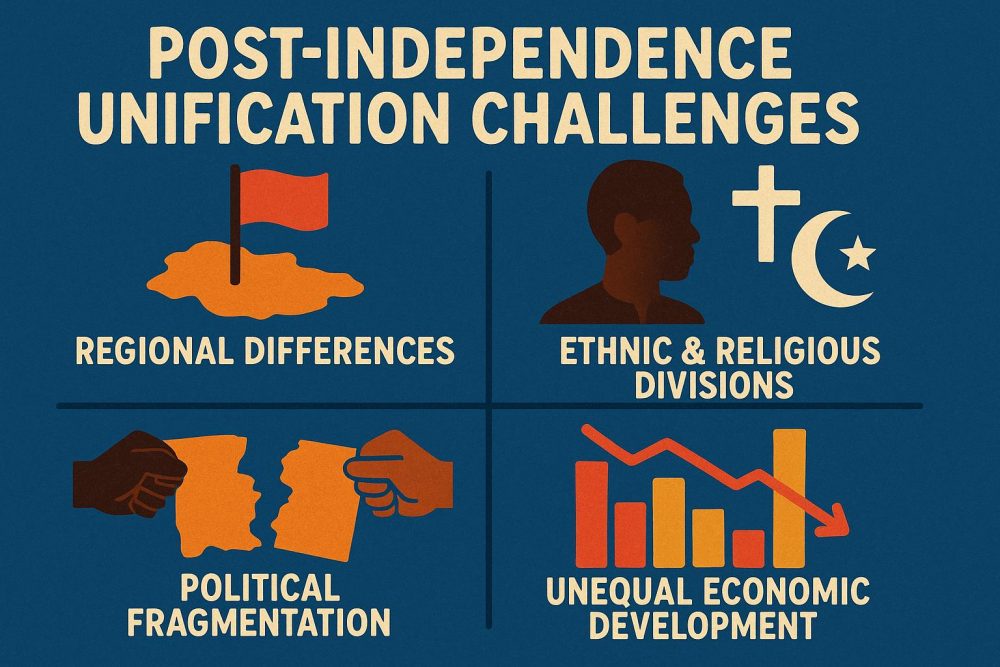
After gaining independence, many countries face significant challenges in unifying diverse populations under a single national identity. These challenges can stem from ethnic, religious, cultural, and linguistic differences. Post-independence unification is crucial for national stability, economic development, and the creation of a cohesive national identity.
Ethnic and Cultural Diversity
One major challenge facing post-independence nations is ethnic and cultural diversity. Countries transitioning from colonial rule often have borders that were drawn arbitrarily, grouping together diverse ethnic groups that may have historical rivalries or differences. This can lead to tensions and conflict, as seen in several nations across Africa and Asia. Understanding how these differences can manifest in societal tensions is crucial for a peaceful coexistence.
Historical Context
In the colonial era, European powers partitioned territories without regard for existing ethnic, linguistic, or cultural boundaries. This has often left a legacy of division within newly independent states. The need to address these divisions is a major step in fostering unity. The dissection of land based on colonial economic and administrative convenience ignored the intricate social fabrics that had developed over centuries. This arbitrary division laid the seeds for future unrest as newly formed states grappling with diverse populations had to create a sense of belonging and national pride among their citizens.
Religion and Identity
Religion can be both a unifying and divisive factor in post-independence nations. While it can provide a source of shared identity and values, religious differences can also lead to conflict, particularly when one group attempts to dominate the political or cultural landscape. Countries like India have faced challenges in integrating diverse religious communities into a unified national identity. It necessitates policies that foster coexistence while respecting the pluralistic nature of society.
Secularism vs. Religious States
The decision to adopt a secular state model or integrate religious laws into national legislation is crucial. Nations like Turkey have pursued secularism to separate religion from state affairs, while others like Pakistan have incorporated religious laws, leading to various outcomes in terms of national unity. This decision is critical not only for maintaining peace and equality but also for ensuring that various religious communities feel represented and protected under national laws. The balance between secularism and religious identity can heavily influence national discourse and stability.
Linguistic Diversity
Language policy is another critical area of concern for post-independence unification. Selecting a national language can be contentious, particularly in countries with multiple indigenous languages. The imposition of one language can marginalize speakers of other languages, leading to discontent and resistance, as seen in nations such as Nigeria. Language, as a fundamental aspect of cultural identity, can either build bridges or barriers between communities.
Policy Approaches
Different approaches have been taken to address linguistic diversity. India adopted a multilingual policy, recognizing 22 official languages, while Indonesia promoted the use of Bahasa Indonesia as a unifying language, despite the presence of hundreds of regional languages. This demonstrates the effectiveness of adopting flexible linguistic policies that acknowledge diversity while striving for unity. Selecting an inclusive language policy can help promote national cohesion and prevent linguistic hegemony from stoking regionalisms.
Economic Disparities
Economic disparities across regions within a country can fuel dissent and division. Post-independence governments often face the challenge of addressing these disparities to ensure equitable development and national unity. Infrastructure development, resource allocation, and employment opportunities are pivotal areas requiring attention. Addressing these issues helps to level the playing field, providing equal opportunities for all citizens, thereby contributing to the establishment of a stable and peaceful nation.
Case Studies
Nigeria’s struggle with uneven resource distribution, particularly concerning oil wealth, has led to tensions between different regions. Similarly, in India, the disparity between richer and poorer states has been a point of contention that requires ongoing policy intervention. These examples illustrate the critical importance of policies that ensure an equitable distribution of resources and opportunities, providing all regions with the ability to participate fully in the nation’s economic life. For further reading and insights, consider consulting detailed reports from reputable [international organizations](https://www.worldbank.org/).
Conclusion
The journey towards unification in post-independence nations involves overcoming numerous hurdles, from managing ethnic and religious diversity to addressing economic inequalities. Each country’s approach may vary based on its unique historical and cultural context. Despite these challenges, the potential for successful unification and cohesive national development remains a promising and achievable goal. The experiences of various countries highlight the importance of adaptable governance that respects diversity while promoting shared national ideals. Legislative frameworks, education, and inclusive policies play significant roles in nurturing a sense of unity and belonging among diverse populations. By considering the insights and practices from countries that have successfully navigated these challenges, others can develop effective strategies to foster unity in diversity. For more in-depth insights, consider exploring specific case studies and reports from reputable [international organizations](https://www.worldbank.org/), which offer further analysis and solutions tailored to these challenges.