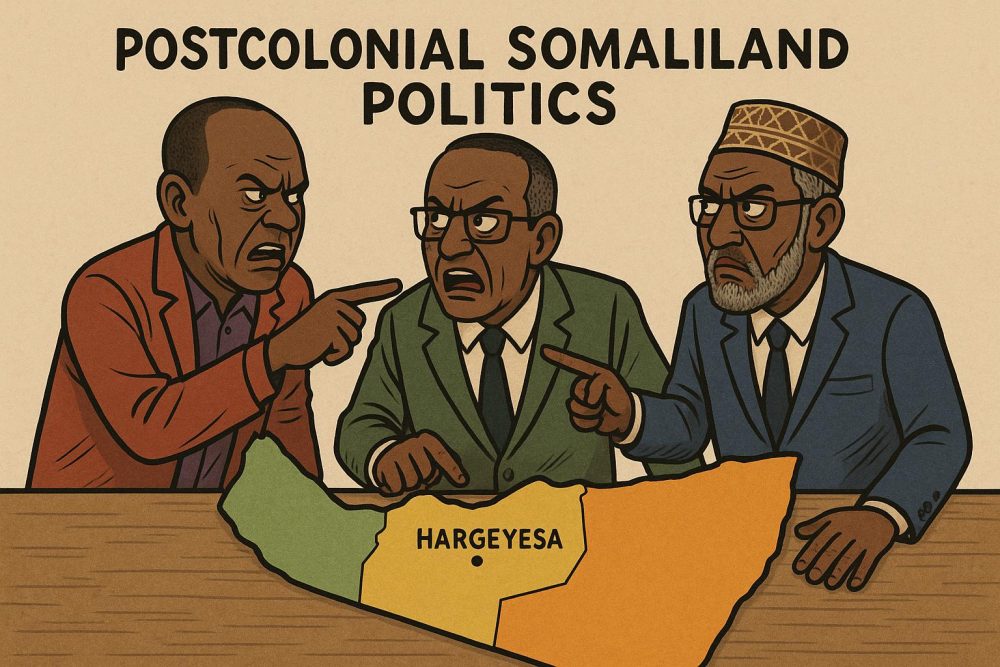
Introduction to Somaliland Politics
Somaliland, a region in the Horn of Africa, proclaimed its independence from the broader Somali Republic in 1991. This move followed a long-standing period of dissatisfaction and conflict within the region. Despite having made substantial internal progress, Somaliland struggles with a lack of international recognition as an independent nation. This article examines the complexities of Somaliland’s political terrain and the challenges it faces on its path toward global acknowledgment.
Historical Background
Colonial Legacy
The political landscape of Somaliland is deeply influenced by its history as a colonial entity. Initially established as a British protectorate in the late 19th century, Somaliland was distinct from Italian Somaliland, which covered the southern regions. Upon gaining independence on June 26, 1960, from Britain, Somaliland voluntarily united with Italian Somaliland just a few days later to form the Somali Republic on July 1, 1960. This union represented a pan-Somali vision aimed at unifying the Somali-speaking peoples in the Horn of Africa.
Path to Declaration
Over the years, the aspirations that led to this union were undermined by political power struggles, civil unrest, and violence, particularly under the dictatorship of Siad Barre, which lasted from 1969 until his overthrow in 1991. The period marked by extensive violence and oppression prompted regions like Somaliland to pursue a renewed sense of autonomy and independence. In May 1991, following the collapse of central authority in Somalia, leaders from the northern regions declared Somaliland’s independence, citing historical grievances and the need for a self-governed and peaceful society.
The Political System
The Hybrid System
Somaliland’s political apparatus is an intriguing blend of traditional authority and modern state structure. The foundation of its governance involves an integration of the Guurti, or council of elders, with contemporary democratic institutions. This council, part of the bicameral parliament, plays a crucial role in mediating disputes and maintaining societal harmony, reflecting centuries-old conflict resolution practices native to Somali society.
Governance Structure
The executive leadership is headed by a president who is elected through a popular vote, demonstrating a commitment to a semblance of democratic process. This executive branch works hand in hand with a bicameral legislative system consisting of the House of Representatives and the House of Elders, or Guurti. While the House of Representatives is tasked with legislative duties, the House of Elders focuses on conflict resolution and socio-cultural affairs, illustrating a practical fusion of governance mechanisms.
Challenges in Pursuing Recognition
Quest for Global Acknowledgement
The pursuit of international recognition remains one of Somaliland’s greatest diplomatic challenges. Despite functioning like a sovereign entity, the international community continues to acknowledge the territorial integrity of Somalia, in line with established international norms, which complicates Somaliland’s aspirations.
Impact on Economic Development
This non-recognition significantly limits Somaliland’s access to international monetary aid and financing. It also restricts its ability to engage in formal international trade agreements and diplomatic relations. Nonetheless, despite these barriers, Somaliland has managed to sustain economic activities through remittances from its diaspora, trading within the Horn of Africa, and establishing local governance systems that foster a conducive environment for limited foreign investment.
Security and Governance
Maintaining Peace and Stability
Remarkably, Somaliland has succeeded in maintaining a level of peace and stability significantly higher than that of the rest of Somalia, which has suffered from pervasive conflict and instability. Effective local governance that emphasizes participation and accountability, along with traditional methods of conflict resolution, has underpinned this stability. The region’s security forces, although modest in size and capability, have been pivotal in safeguarding the region against widespread violence.
Relations with Neighboring Regions
Diplomatic Engagements
Somaliland’s foreign relations are characterized by cautious diplomacy aimed at balancing its quest for recognition with practical regional engagement. Tensions remain high with Somalia due to the unresolved political status. Nonetheless, Somaliland actively seeks to establish trade and strategic relations with neighboring countries like Ethiopia and Djibouti, which not only share proximity but are also vital trading partners contributing to Somaliland’s economic strategy.
Conclusion
In conclusion, Somaliland’s postcolonial politics reflect a nuanced landscape where traditional governance harmonizes with modern political structures. Despite facing ongoing challenges, not least from the lack of international recognition, Somaliland remains committed to its path of political stability and reform. It demonstrates resilience and adaptability in navigating the complex dynamics of statehood and continues to advocate for its rights to global acknowledgment as an autonomous entity. For more detailed information on Somaliland, please visit [this resource](https://example.com/somaliland-politics).