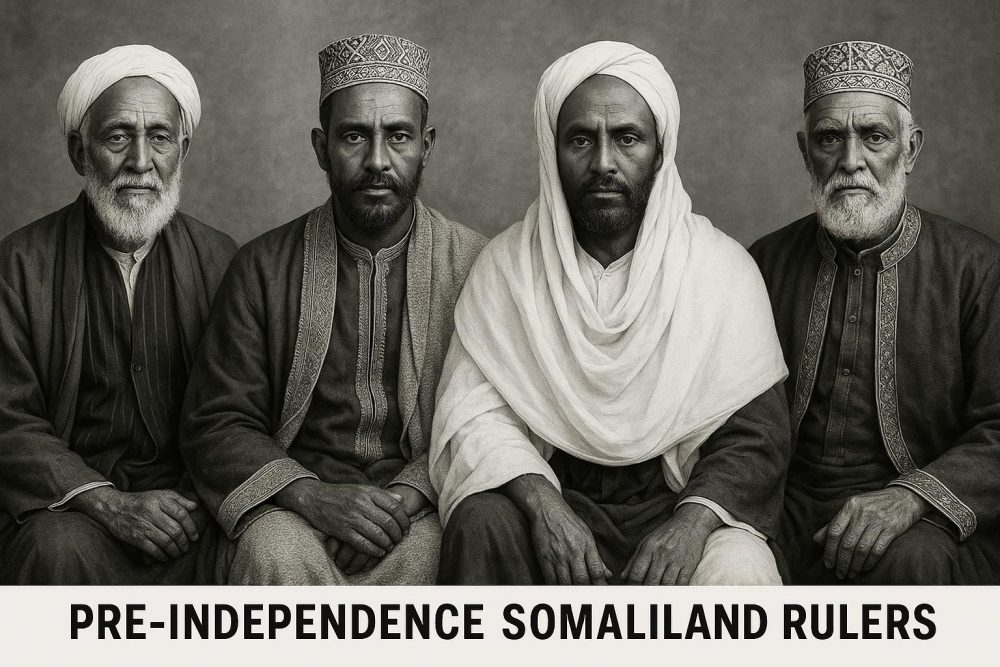
Historical Context
Prior to gaining independence, the area now recognized as Somaliland experienced various forms of governance across different time periods. Each era influenced the region’s social, political, and economic landscapes, leaving a legacy that continues to impact current cultural dynamics. Positioned at a strategically important point in the Horn of Africa, Somaliland was a confluence for cultural and economic exchanges. This article delves into the pivotal rulers and governance structures that shaped Somaliland before it became the self-governing region we know today.
Sultanate of Ifat and Adel
The early political landscape of Somaliland was profoundly affected by the Sultanate of Ifat and the Sultanate of Adel. These sultanates were critical in laying the foundational structures of governance and societal organization in the region. The Sultanate of Adel, in particular, was renowned for its extensive trade networks. These networks not only traversed the vast expanse of the Red Sea but also reached into the complexities of the Arabian Peninsula.
The Sultanate’s Administration
Administratively, the rulers of these sultanates were instrumental in establishing governance systems that effectively combined Islamic jurisprudence with indigenous customs and traditions. This blend provided a stable and consistent administrative approach, integral to regional stability. The rulers managed to extend their influence by forging alliances sealed through marital ties and economic collaboration. This strategic approach not only solidified their rule but also expanded their territories. The groundwork laid by these rulers provided a governance template that was utilized in subsequent power structures in the region.
British Protectorate Era
By the 19th century, Somaliland’s political makeup underwent a substantial transformation with the advent of European colonial powers. The British Empire established a protectorate over Somaliland in 1888—a status that persisted until the emergence of mid-20th-century independence movements.
Role of Traditional Chiefs
During the British protectorate, traditional hereditary chiefs managed to retain considerable autonomy over local affairs. Acting as intermediaries, these chiefs had the crucial responsibility of bridging interactions between the British colonial administrators and the local communities. Their efficacy in managing internal disputes and maintaining cultural integrity was vital in preserving the cultural heritage and identity of Somaliland. This preservation function facilitated by these chiefs was instrumental in creating a robust platform upon which the call for independence was later founded.
Transition to Independence
The pathway to independence was characterized by the emergence of new political leaders who ardently advocated for self-governance. Their persistent efforts were rewarded on June 26, 1960, with the declaration of independence. This historic announcement signified the end of colonial dominion and heralded the dawn of self-rule and a new era in Somaliland’s rich history.
Conclusion
In conclusion, the pre-independence history of Somaliland is a rich tapestry woven with the varied influences of numerous rulers and political entities. From the powerful sultanates to the era of British colonial oversight, each epoch left a lasting imprint on the region. A nuanced understanding of this intricate historical backdrop is crucial for a comprehensive appreciation of the socio-political and cultural dynamics that continue to influence Somaliland today. Those interested in engaging further with this compelling historical narrative are encouraged to explore additional readings and resources for a deeper insight into the distinctive evolution of governance in Somaliland.