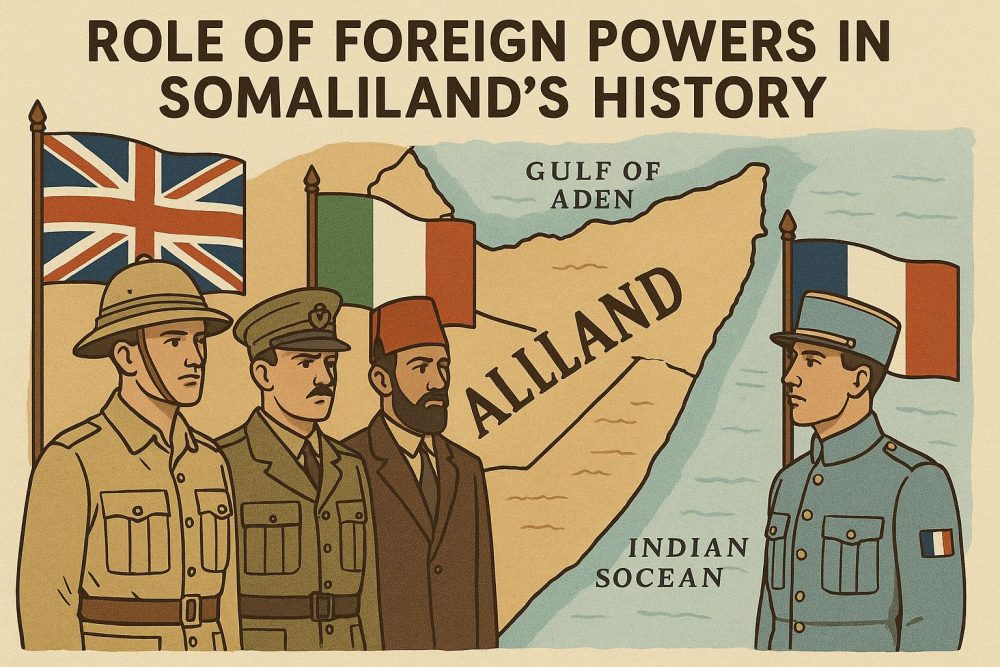
The Influence of Foreign Powers in Somaliland’s History
The history of Somaliland, a self-declared state that remains internationally unrecognized, is marked by the intervention and influence of various foreign powers. These interventions have played a critical role in shaping the political, economic, and social landscape of the region. Understanding the depth of this influence offers insights into the ongoing challenges and achievements of Somaliland today.
European Colonialism: Late 19th and Early 20th Century
During the late 19th century, European powers began to assert their influence in Somaliland. The British established a protectorate in northern Somaliland in 1887. This move was primarily aimed at securing maritime routes to India and safeguarding their interests in the Suez Canal area. As part of the broader Scramble for Africa, France and Italy also sought to establish their presence in the region, with the French administering Djibouti and the Italians engaging in the southern parts of Somalia.
Impact on Local Society
The European presence significantly impacted the socio-political structure of Somaliland. The colonial powers imposed administrative systems that often disregarded traditional clan structures, leading to significant upheavals in local governance. Economic policies, primarily focused on resource extraction, sometimes resulted in socioeconomic disruptions within the communities. Despite these challenges, the British administration did contribute to infrastructure and educational developments, although these efforts were limited in scope and scale. They built roads and schools, which laid a foundational framework for future generations, even if these developments were initially geared towards facilitating colonial administration rather than fostering local prosperity.
World War II and Its Aftermath
During World War II, Somaliland found itself briefly under Italian control following the Italian invasion in 1940. However, this was short-lived as the British successfully recaptured the territory in 1941. This period was marked by heightened military activities, further involving local populations either as soldiers or through the strategic use of their lands. The war introduced new dynamics into the region, as local communities were drawn into a global conflict.
Transition to Independence
Following the end of World War II, colonial powers faced increased pressure to decolonize. The move towards independence gained momentum, and Somaliland achieved independence from Britain on June 26, 1960. However, this independence was fleeting. Only a few days later, on July 1, 1960, Somaliland willingly unified with the Trust Territory of Somalia (formerly Italian Somaliland), marking the formation of the Somali Republic. This unification was fueled by Pan-Somali sentiments, although it would later present challenges as differing colonial legacies manifested in governance and political integration.
The Cold War Era
The dynamics of the Cold War also bore heavily on Somaliland and the greater Somali region. As the United States and the Soviet Union sought to extend their influence across Africa, Somalia, for a time, received aid and military support from both superpowers. However, these superpower struggles rarely considered local complexities, often exacerbating existing tensions between communities.
Soviet and American Involvement
Initially, Somalia leaned towards the Soviet Union, benefiting from military training and equipment. The alliance with the Soviets provided Somalia with modern military technology, which it utilized in regional conflicts. However, following the Ogaden War with Ethiopia—a nation which was also allied with the Soviet Union at that time—Somalia switched allegiances to the United States. This switch further complicated regional dynamics, as Cold War powers continued to use the Horn of Africa as a theater for their global geopolitical strategies.
The Emergence of Somaliland
The fall of the Somali government in 1991 and the ensuing civil war created a power vacuum, leading to instability in much of the region. In this context, Somaliland declared its independence. Although no foreign power recognized its sovereignty, Somaliland was able to maintain relative peace and stability in stark contrast to the rest of Somalia. This stability highlighted a unique development in the region and demonstrated the ability of local governance structures to effectively manage and sustain peace.
Current Foreign Relations
Today, Somaliland seeks international recognition and has cultivated informal ties with several countries. Driven by strategic interests such as counter-terrorism and maritime security, various nations have shown interest in developing relations with Somaliland. However, formal recognition remains elusive, partly due to complex regional politics and international diplomatic calculations.
Foreign entities, including international organizations and agencies, play pivotal roles in aid and development projects. The presence of aid organizations underscores the region’s ongoing need for external support, reflecting the historical pattern of foreign involvement in Somaliland’s affairs. These relationships are generally positive and contribute significantly to development efforts in areas such as education, healthcare, and infrastructure.
Conclusion
The history of foreign powers in Somaliland underscores a complex tapestry of interactions that have indelibly shaped its past and continue to influence its present. These relationships illustrate the blend of foreign interests and local dynamics, forming a critical part of Somaliland’s narrative on the world stage. As Somaliland continues to navigate its path towards international recognition and development, understanding this historical context remains essential for both local actors and international partners. It is through this lens that the ongoing pursuit of self-determination and prosperity can be comprehended and supported.