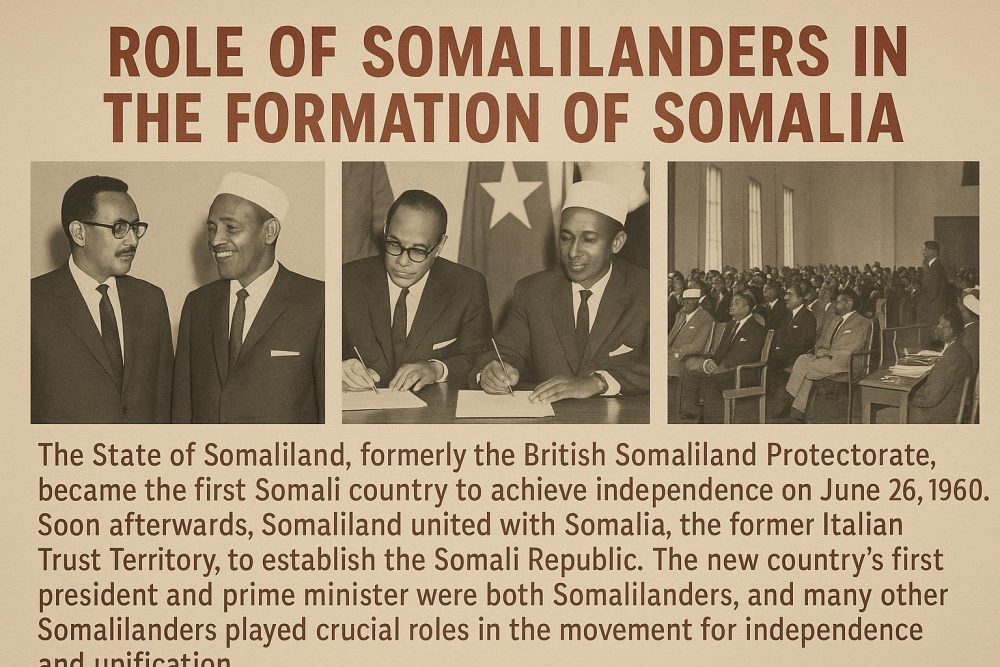
The Historical Context of Somalilanders in Somalia’s Formation
The role of Somalilanders in the formation of Somalia is both significant and complex, reflecting a rich tapestry of historical, political, and social influences. Located in the Horn of Africa, Somaliland and Somalia have histories that are deeply intertwined, particularly during the mid-20th century. Understanding Somaliland’s involvement in forming what came to be known as the Somali Republic involves examining the period leading up to and following its union with the Trust Territory of Somalia.
Colonial Legacy and Initial Movements
Somaliland was a British protectorate from the late 19th century until its independence on June 26, 1960. In contrast, its southern neighbor, Somalia, was an Italian colony. During the final years of colonial rule, a growing sentiment for unification and independence began to shape among Somali territories. This desire for unification was deeply rooted in a pan-Somali ideology, which sought to bring together the Somali-speaking populations scattered across the Horn of Africa. The colonial powers had drawn arbitrary boundaries that divided these Somali societies, and the end of colonial rule presented an opportunity to rectify this.
Despite differences in colonial administration and cultural influences between the British and Italian territories, a shared linguistic, cultural, and historical heritage fueled the push for a united Somali state. The pan-Somali movement was led by influential leaders and intellectuals who sought to forge a single national identity that could encompass the diverse Somali clans and regions. The movement was marked by aspirations of self-governance and a strategic alignment of interests among the territories.
The Act of Union
Following the end of colonial rule, Somaliland and Somalia took substantial steps toward unification. Somaliland gained independence from Britain on June 26, 1960, and just five days later, on July 1, 1960, it joined with the Trust Territory of Somalia (formerly Italian Somalia) to form the independent Somali Republic. This union, known as the Act of Union, was considered a pivotal moment in the creation of a united Somali state. Despite its significance, the Act of Union faced numerous challenges, partly due to the hurried nature of the merger and differing colonial legacies that influenced the political and administrative frameworks.
The unification process, while driven by a noble ideology, was marred by several practical issues. The two regions had developed distinct administrative structures, legal systems, and educational frameworks under their respective colonial rulers. As a result, the integration of these systems posed significant challenges. The lack of a clear framework for merging these systems led to confusion and inefficiencies in governance.
Political Participation
Somalilanders actively participated in the nascent Somali Republic’s political life. Prominent leaders from Somaliland held influential positions within the newly formed government. Their involvement was instrumental in laying down the political foundations of the new republic and ensured that the interests of their region were represented at the national level. However, as the political landscape evolved, issues began to surface due to perceived inequalities and favoritism within the political system, sparking regional discontent.
The initial enthusiasm for the unified state began to wane as power dynamics shifted. As individuals from southern Somalia increasingly dominated the political and administrative spheres, many in Somaliland felt their interests were being sidelined. This perception of marginalization led to growing dissatisfaction and calls for more equitable representation. Historical accounts indicate that this period was marked by a series of political maneuvers and negotiations to address these grievances, though few resulted in lasting solutions.
Challenges Post-Unification
The period following unification was marked by political tensions, as Somaliland and the southern regions had different colonial legacies, which led to varied expectations and governance styles. These tensions became more pronounced over the years, contributing to eventual political discord. The perceived marginalization and unequal treatment of people from the northern regions exacerbated the strains within the union, leading to clashes over resources, administrative appointments, and policy priorities.
The amalgamation of the two regions into a single entity did not immediately result in a homogenous society. Instead, lingering differences continued to influence political relations and economic priorities. Governance challenges were further compounded by clan dynamics, which played a crucial role in shaping political alliances and rivalries. The complexity of clan politics, juxtaposed with regional divisions, often resulted in a fragile political equilibrium that was prone to disruptions.
Modern Implications and Reflections
Since proclaiming itself independent in 1991, Somaliland has sought recognition separate from Somalia. Its historical experiences and contributions to the formation of the Somali Republic play a pivotal role in its quest for international acknowledgment. The quest for recognition is driven by a desire to establish a sovereign identity distinct from Somalia, rooted in its unique history and political aspirations.
Today, the story of Somalilanders in the formation of Somalia serves as a crucial element in understanding the broader Somali political landscape. It highlights the complexities of national identity, the impact of historical legacies, and the aspiration for unity amidst diversity. The historical experience of Somaliland provides valuable lessons on the challenges and opportunities of nation-building in post-colonial contexts, particularly in regions characterized by diverse ethnic and cultural identities.
As Somaliland continues to assert its independence, the international community faces the challenge of balancing calls for self-determination with the principles of territorial integrity. The recognition of Somaliland remains a contentious issue, with political, economic, and strategic implications for the broader region. An understanding of Somaliland’s historical role in Somalia’s formation offers a foundation for informed dialogue and policy-making.
For further exploration of the intricate history between Somaliland and Somalia, and the ongoing developments regarding Somaliland’s status, consider visiting reputable academic sources and dedicated historical archives. These resources offer comprehensive insights into the political dynamics that continue to shape the region. Research libraries, regional think tanks, and historical societies provide valuable materials that contribute to a deeper understanding of this complex and evolving narrative.