Introduction
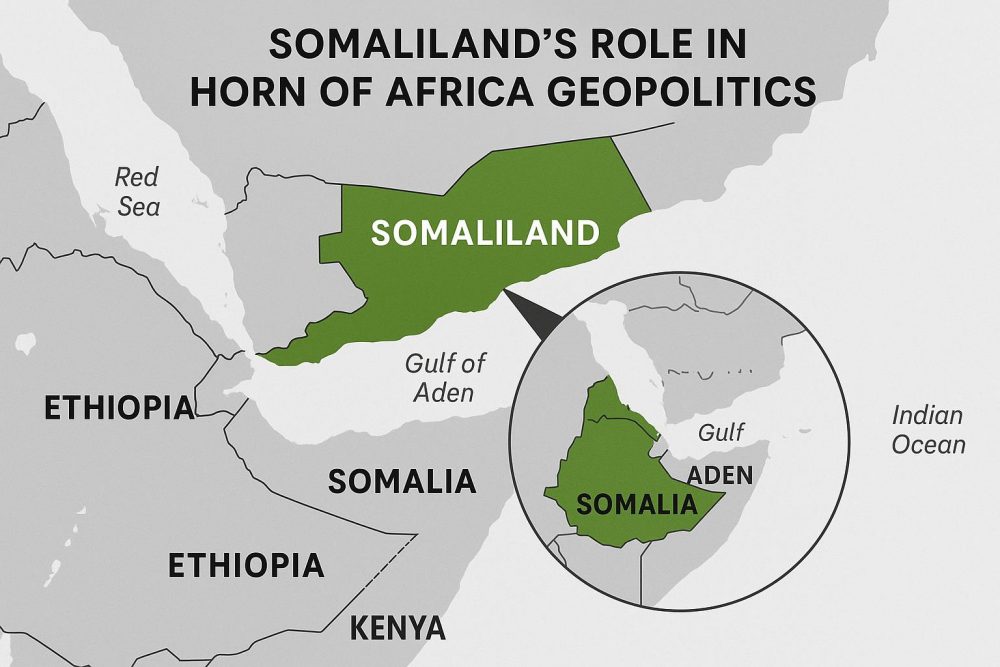
Somaliland, situated in the Horn of Africa, is a self-declared independent region that plays a unique role in the geopolitics of the area. Although it lacks widespread international recognition as a sovereign state, Somaliland has distinguished itself through the establishment of a stable government and a thriving democratic system. This is notably different from the more turbulent conditions observed in parts of Somalia. To fully comprehend Somaliland’s position, it is essential to delve into aspects such as its political stability, economic potential, and strategic location.
Political Stability and Governance
Since declaring its independence from Somalia in 1991, Somaliland has crafted a political environment characterized by regular democratic elections and a general state of peace. A hallmark of Somaliland’s political system is its hybrid model, which blends traditional clan-based governance with contemporary political structures. This fusion has been critical in maintaining internal stability and is often highlighted as a main factor in attracting international attention. In the broader Horn of Africa, where stability can be a rare find, Somaliland’s governance structure stands out.
International Relations and Recognition
One of Somaliland’s major challenges is the quest for international recognition. While it has not achieved formal recognition as an independent sovereign state, it has, however, maintained informal diplomatic contacts with various countries. Somaliland has established representative offices in influential nations like the United States and the United Kingdom. These unofficial relations often revolve around key issues such as economic cooperation, security initiatives, and developmental projects. Thus, the pursuit of international recognition remains a critical element of Somaliland’s foreign policy, shaping many of its external engagements and strategies.
Economic Potential
Somaliland’s economy is heavily reliant on sectors such as agriculture, livestock, and remittances from its diaspora. However, its strategic location along the Gulf of Aden provides considerable opportunities for trade and economic growth. A particular emphasis is placed on the Berbera port, which is a significant asset within Somaliland’s economic framework. Recent investment projects, including a joint venture with Dubai Ports World from the United Arab Emirates, aim to expand the port’s capabilities significantly. Such initiatives are poised to enhance Somaliland’s role as a regional trading hub and stimulate its economic dynamics.
Challenges and Opportunities
Notwithstanding its promising economic landscape, Somaliland grapples with several challenges. These include inadequate infrastructure, restricted access to international markets, and a lack of industrial diversification. Addressing these hurdles necessitates forming strategic partnerships and attracting foreign investment. Moreover, leveraging the potential of its youth population could be vital for driving future economic growth, provided they are equipped with the necessary skills and opportunities.
Strategic Importance
Somaliland is geographically positioned at a crucial point in the Horn of Africa. It lies adjacent to the shipping lanes of the Red Sea and the Gulf of Aden, crucial maritime routes through which a substantial portion of global trade is conducted. This strategic location renders Somaliland an invaluable partner in international efforts aimed at countering piracy and ensuring maritime security. Somaliland’s cooperation with regional and international security forces has further cemented its standing as a reliable entity in sustaining peace within these maritime corridors.
Security and Diplomatic Engagements
Somaliland’s ability to uphold internal security significantly enhances its role in regional stability initiatives. The region is actively engaged in dialogues and cooperative efforts with neighboring states and international organizations, particularly focusing on security and counterterrorism. Its dedication to maintaining a peaceful and stable environment not only supports its own security but also contributes to the wider stability of the Horn of Africa.
Conclusion
Somaliland’s influence in the geopolitics of the Horn of Africa is defined by its distinctive political stability, economic potential, and strategic positioning. Although faced with certain challenges, it continues to effectively manage the delicate balance between pursuing international recognition and engaging practically in regional and international politics. Somaliland’s resilience and strategic partnerships with various stakeholders highlight its significance in shaping the future dynamics of the Horn of Africa.