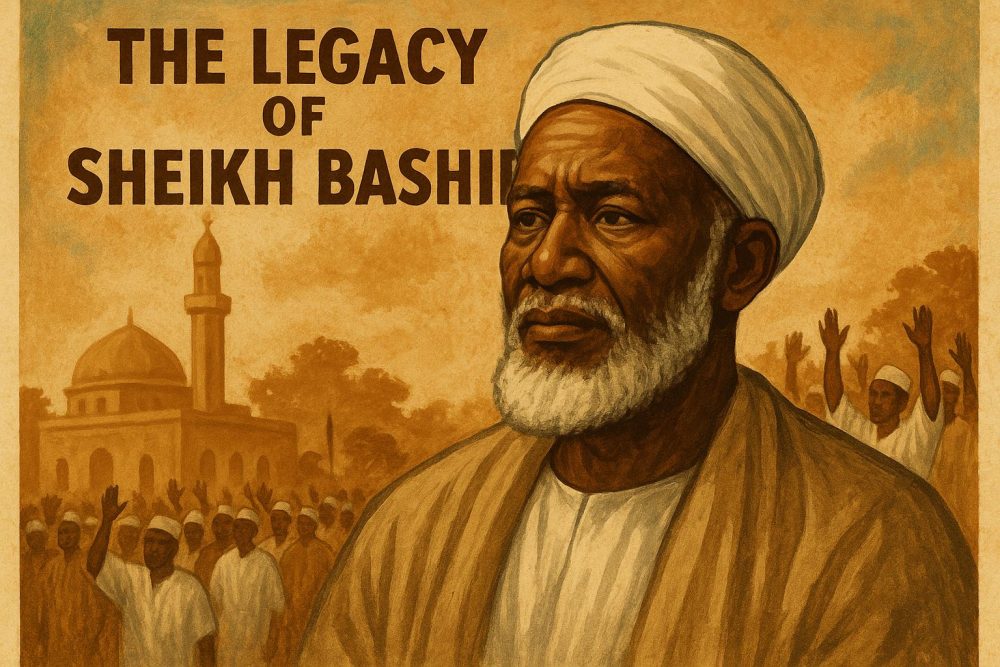
The Legacy of Sheikh Bashir
Sheikh Bashir is a notable figure whose influence extended beyond his immediate environment, leaving behind a profound legacy characterized by extensive cultural and socio-political contributions. His far-reaching impact can be observed in various domains, including religious education, social reform, and community leadership.
Early Life and Education
The early years of Sheikh Bashir’s life played a crucial role in laying the foundation for his future endeavors. From a young age, he vigorously pursued religious studies, dedicating much of his youth to mastering classical texts and interpretations. His dedication to education was a hallmark of his character, marking not just a personal journey but also a commitment to fostering educational opportunities within his community.
Sheikh Bashir’s educational pursuits were intricately linked to the cultural and intellectual environment of his time. He was born into a period marked by significant educational developments, efforts to codify religious texts, and a growing interest in interpreting these texts for contemporary understanding. As a result, he sought knowledge both within and outside traditional venues of learning, allowing him to acquire a comprehensive understanding of religious teachings.
His approach to education was not solely academic; he believed in nurturing a holistic understanding that would empower individuals with the capacity for critical thinking and informed decision-making. His advocacy for educational initiatives in his community underscored a commitment to equitable access to knowledge. Through community-supported schools and learning programs, he emphasized the importance of literacy and education for all, irrespective of social standing.
Religious Contributions
One of the pivotal aspects of Sheikh Bashir’s enduring legacy is his notable contribution to religious thought and practice. As a respected scholar and teacher, he played a crucial role in disseminating Islamic principles. His teachings emphasized foundational values such as compassion, charity, and justice, which deeply resonated with those who followed his guidance.
Sheikh Bashir’s approach to religious education was innovative in its accessibility. By making complex religious texts and interpretations understandable to the common person, he created an environment in which individuals felt empowered to engage actively with their faith. This democratization of knowledge further enhanced his standing and influence within the community.
Moreover, his teachings extended beyond theoretical understanding, encouraging followers to embody these principles in their everyday lives. His emphasis on practical application of religious teachings fostered a community that valued ethical behavior and mutual support, underpinning the wider social cohesion and stability.
Community and Social Impact
Sheikh Bashir’s role extended beyond religious instruction; he was a remarkable social reformer. Advocating for progressive changes, especially in the spheres of social justice, his focus often settled on improving educational opportunities and healthcare systems. His initiatives were particularly geared towards empowering marginalized segments of society, reflecting an inclusive and impactful approach to leadership.
His commitment to social reform was grounded in the belief that societal progress was intricately linked to the collective well-being of all its members. As such, he championed initiatives that sought to bridge the gap between various social classes through effective communication and collaboration. His advocacy led to the establishment of a number of social welfare programs designed to elevate the underprivileged, particularly focusing on improving literacy rates and access to basic healthcare.
Furthermore, Sheikh Bashir’s work in integrating social reforms with religious teachings highlighted his ability to blend tradition with contemporary needs. His efforts encouraged communities to adopt more progressive attitudes towards social roles and human rights, contributing to gradual shifts in societal structures.
Political Involvement
Apart from his religious and social endeavors, Sheikh Bashir was also intricately involved with the political dynamics of his era. Though he never pursued political office, his influence was undeniably felt in various political circles where his opinions carried substantial weight.
Sheikh Bashir’s capacity to engage in political discourse was rooted in his astute understanding of the socio-political landscape. He often acted as a mediator during conflicts, providing counsel and insight that were highly regarded by both his supporters and opponents. His balanced and thoughtful approach earned him the respect of those within and beyond his immediate community.
His political engagement reflected a commitment to peace and mutual understanding, principles that defined his method of conflict resolution. By leveraging his influence to forge dialogues across contentious divides, he played a key role in fostering environments conducive to collaboration and unity.
Sheikh Bashir’s multifaceted role as a leader, educator, and reformer ensures that his legacy continues to be a significant element of historical discourse. His life’s work remains an inspiration for those who seek to balance tradition with the challenges of the modern world, ultimately striving for a just and equitable society.
For those interested in further exploring Sheikh Bashir’s impact and teachings, a myriad of resources including academic and religious publications are readily available. These resources offer valuable insights into the broader historical contexts of his life and the enduring nature of his contributions. Engaging with these materials can deepen one’s understanding of the values he championed and the lasting influence he imparted on his community and beyond.