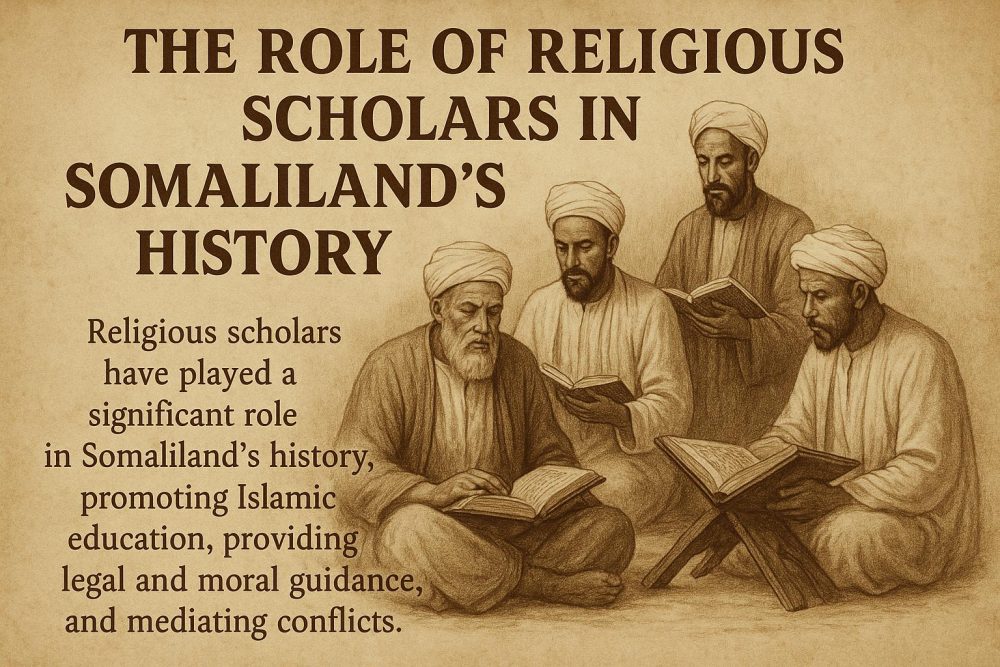
The Historical Context of Religious Scholars in Somaliland
Religious scholars have played a significant role in the history of Somaliland, a region located in the Horn of Africa. Their influence spans various aspects of societal development, including education, governance, and conflict resolution. Understanding the impact of these scholars requires delving into the socio-political and historical background of the area.
Educational Influence
Religious scholars, or Ulema, have historically been the primary custodians of knowledge in Somaliland. They have established and managed religious schools known as madrasas, which have been instrumental in teaching the Quran, Hadith, and various Islamic sciences. These institutions laid the foundations for literacy and education in the region before the introduction of formal Western education systems. Over time, madrasas served as crucial centers for learning and cultural preservation, playing a key role in instilling Islamic values and knowledge.
In looking at the influence of Ulema, it is important to recognize that beyond religious teachings, these educational institutions provided a platform for the transmission of cultural heritage and traditional intellectual life. They were not merely centers for learning religious texts but also places where discussions regarding philosophy, logic, and various sciences were held. This integrated approach to education ensured that students received a well-rounded understanding of not just Islamic doctrine but also of the world and the universe as understood through the prism of Islamic scholarship.
For many centuries, madrasas remained the sole institutions where formal learning took place, effectively making religious scholars the gatekeepers of knowledge. Their pivotal role in education contributed to their esteemed position in society and facilitated their influence in other areas such as governance.
Governance and Mediation
In addition to providing education, religious scholars have been pivotal in governance and conflict resolution in Somaliland. They wielded significant influence in the pre-colonial sociopolitical landscape, where clan-based governance was prevalent. The scholars often acted as mediators in disputes, providing a voice of reason grounded in Islamic jurisprudence, known as Sharia.
In societies organized along clan lines, where tribal affiliations and loyalties often played a vital role in determining political and social outcomes, the presence of religious figures helped to transcend these potentially divisive elements. By relying on principles of justice, equality, and mutual respect enshrined in Islam, religious scholars managed to mediate conflicts and build bridges between disputing parties.
For instance, during the colonial and post-independence periods, religious figures were instrumental in mediating conflicts and maintaining stability. Their ability to arbitrate disputes reinforced their status as important societal figures and contributed to the development of peace and cohesion within the region. Even when the colonial powers attempted to impose their own rule of law, the respect for religious arbitration persisted due to the deeply rooted faith the people had in their religious leaders.
The Transition during Colonial Rule
As European colonial powers expanded their reach into Somaliland, the role of religious scholars underwent significant transformations. Colonial administrations often attempted to curtail their influence by establishing Western-style educational institutions and governance systems. Despite this, the Ulema managed to retain a degree of influence due to their deep-rooted connection to the community and their moral authority derived from religious knowledge.
The colonial powers introduced Western legal structures and administrative systems that sought to replace existing governance mechanisms. However, the resilience of the Ulema was evident in their ability to adapt to the changing times. Rather than resisting outright, many religious scholars took the opportunity to engage with these changes, ensuring that Islamic principles continued to inform the evolving socio-political context. By finding ways to integrate their scholarship with new systems, they remained relevant and influential.
Post-Independence and Contemporary Roles
After Somaliland declared independence from Somalia in 1991, religious scholars continued to adapt their roles to fit the evolving political landscape. They actively participated in the drafting of Somaliland’s constitution and helped integrate Islamic principles into the legal framework. Moreover, they have been vocal advocates for issues such as social justice, education reform, and community development.
In contemporary times, their influence extends to various sectors, including politics, where they often advise leaders and policymakers on decisions that impact society. As influential figures, religious scholars have taken on advisory roles, ensuring that laws and policies do not veer far from the moral and ethical parameters set by their religious beliefs. This ongoing involvement marks them as critical actors in national development discourse.
Their enduring presence underscores the significant, though sometimes understated, role they play in shaping the moral and ethical fiber of Somaliland. Moreover, their adaptability highlights how traditions can be preserved while also embracing necessary progress and reform.
Concluding Remarks
Religious scholars in Somaliland have historically been essential to the region’s cultural, educational, and political landscape. Their continued relevance highlights the unique blend of tradition and modernity that characterizes Somaliland’s approach to governance and community life. Understanding their role provides key insights into the broader historical and cultural dynamics at play in the Horn of Africa.
As the nation continues on its path of political independence and development, the religious scholars of Somaliland remain invaluable both as traditional custodians of culture and as contemporary advisors guiding its future. To learn more about the contributions of religious scholars in this region, one might explore resources such as local academic institutions or historical archives, offering deeper insights into their role in shaping the socio-political fabric of Somaliland.