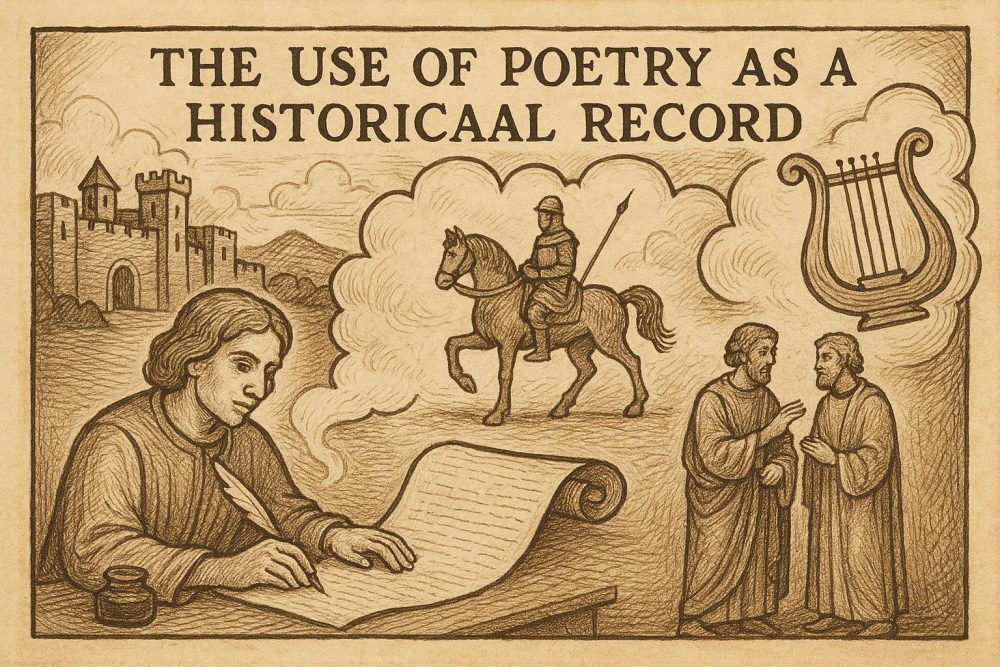
The Role of Poetry in Historical Documentation
Poetry has been an integral component of human expression throughout the history of civilization. This literary form often acts as a mirror to the times, offering insight into societal norms, political climates, and personal experiences. As a historical record, poetry provides a unique perspective that complements other historical documents, enriching our understanding of the past in a deeply human way.
Poetry as a Reflection of Societal Values
Historical poetry often encapsulates the cultural and social values prevalent during the period in which it was created. Poets frequently address issues of morality, justice, and communal identity, offering future generations a window into the societal priorities of the past. For instance, works from the Romantic era underscore the period’s heightened focus on nature and individualism. The Romantic poets, such as William Wordsworth and Samuel Taylor Coleridge, used their poetry to express a profound admiration for the natural world, reacting against the industrialization that was rapidly changing society. These poems resonate with modern readers because they highlight an enduring human concern with our relationship to nature and our inner, individual selves.
Beyond Romanticism, poetry has often been a medium through which societal values are questioned and reshaped. In the Harlem Renaissance, poets like Langston Hughes used their work to reflect on racial identity and the quest for equality during a period of significant social change in the United States. Such poems provide a snapshot of the cultural dynamism of the era, capturing the voices and struggles of people striving for recognition and rights.
Political Commentary and Social Critique
Throughout history, poets have used their craft to critique governance and advocate for social change. These works serve as an essential record of political dissent and public sentiment. By examining political poetry, historians gain insight into the public’s response to events such as wars, revolutions, and reforms.
For example, during the era of the French Revolution, poets like William Blake and Percy Bysshe Shelley expressed their revolutionary ideas through verse, advocating for liberty and critiquing tyranny. These poetic works not only communicate the fervor of revolutionary ideals but also reveal the passion and urgency felt by individuals who experienced these tumultuous times firsthand. Similarly, during the Vietnam War, poets like Allen Ginsberg and Denise Levertov wrote powerful pieces that condemned the conflict and advocated for peace, capturing the voices of protest and dissent that were prominent at the time.
Political poetry is not restricted to times of war and revolution. In facing environmental issues, modern poets continue to use their voices to comment on the state of the world, urging action and reflection. This ongoing tradition of using poetry as a tool for social critique emphasizes the form’s enduring relevance in political discourse.
Personal Histories and Public Events
While historians typically rely on official records and documents, poetry offers a more personal narrative, documenting the human aspect of history. On a personal level, poetry captures the intimate details of people’s lives, providing insights into their thoughts, emotions, and daily experiences. These personal accounts within poems often reveal emotions and perspectives that are absent from traditional records. This provides a richer and more nuanced understanding of historical events.
For example, in World War I, soldiers like Wilfred Owen and Siegfried Sassoon wrote poetry that conveyed the harrowing realities of trench warfare. Their works provide visceral images and first-hand accounts of the brutality and futility of war, adding a human dimension to historical records that often focus on political and strategic perspectives. The emotions conveyed through their words offer a valuable perspective on the psychological impact of war on individuals.
Moreover, personal expressions in poetry can contribute to our understanding of broader historical phenomena, such as migration, by illustrating the experiences of those who lived through such events. These accounts deepen our appreciation for the sacrifices and aspirations of individuals who have shaped social and cultural landscapes.
Cross-Cultural Exchange and Continuity
Poetic works also embody the exchange of ideas and cultural practices across different societies and time periods. By analyzing poetry, historians can trace the influences of different cultures and the continuity of themes throughout history. Historical poetry reflects the interconnectedness of human experience, revealing how themes of love, conflict, and resilience have transcended borders and epochs.
Classical poetry from the East, such as the works of Persian poets like Rumi and Hafez, continues to influence Western literature, demonstrating enduring cultural exchanges. Their poetry, rich with metaphoric language and philosophical insight, explores universal themes that resonate across diverse audiences. Similarly, the influence of ancient Greek and Roman poetry on Western literary traditions illustrates how ideas and literary techniques have traveled and transformed between cultures.
This cross-cultural exchange in poetry highlights the universal themes present throughout human history, emphasizing our shared experiences and aspirations. By exploring the diverse traditions of poetic expression, we deepen our understanding of the human condition and recognize the continuity of artistic endeavor across time and geographic boundaries.
To explore further, consider visiting resources provided by noteworthy literary and historical institutions to deepen your understanding of the significance of poetry as a historical source. These resources can offer additional context and analysis, highlighting the contributions of poets across different eras and cultures to our understanding of history.