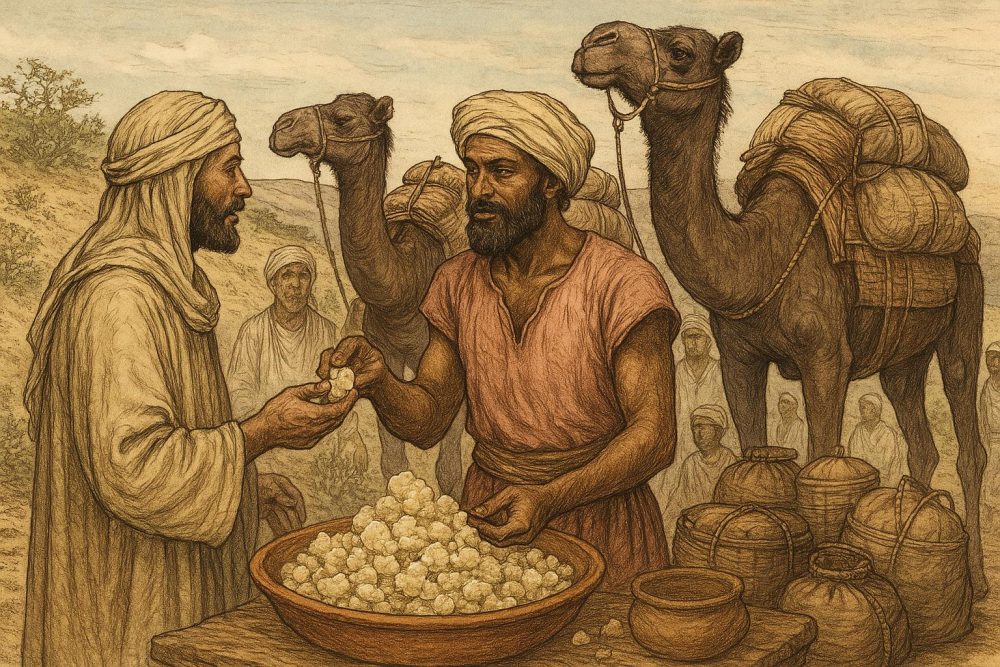
The Historical Significance of Frankincense Trade
The trade of frankincense has played a pivotal role in shaping the economies and cultures of various ancient civilizations. Frankincense, an aromatic resin derived from the Boswellia tree, was highly prized for its use in religious rites, medicinal purposes, and as a perfume. Its value in ancient times cannot be overstated, making it a key commodity in historical trade networks.
Origins and Early Usage
Frankincense has its origins in the Arabian Peninsula, specifically Southern Arabia, where the Boswellia trees thrive in the arid climate. Early evidence suggests that the inhabitants of this region were extracting and utilizing frankincense as far back as the third millennium BCE. Over time, its uses expanded, promoting trade with neighboring regions.
The first documented use of frankincense is intertwined with the religious and cultural practices of early civilizations. Initially, it was primarily employed by local communities for religious ceremonies and as a healing agent. The aroma of burning frankincense was believed to have divine attributes, facilitating a spiritual connection that transcended ordinary human understanding.
Trade Routes and Economic Impact
Trade routes known as the Incense Road were established to transport frankincense from Southern Arabia to the Mediterranean, a journey that spanned vast deserts and involved complex logistics. These trade routes facilitated the exchange not only of goods but also of ideas and culture across civilizations. Towns along these routes benefited economically, growing into bustling centers of commerce.
The Kingdom of Saba (Sheba) was a significant participant in the frankincense trade, controlling key points along these routes. This strategic position allowed them to levy taxes on traders and amass considerable wealth. The Nabateans, who inhabited the northern Arabian region, also prospered significantly, famously building the city of Petra as a trading hub.
As trade expanded across the ancient world, frankincense became more than just a regional commodity; it was integrated into the broader economic fabric of empires such as the Romans and Byzantines. These empires relied on the continuous supply of frankincense to fulfill the spiritual and health demands of their populace, further amplifying its economic footprint.
Cultural and Religious Importance
Frankincense held immense cultural and religious significance. It was burned in temples and shrines across different cultures, where its aromatic smoke was believed to carry prayers to the heavens. In ancient Egypt, frankincense was used in embalming rituals, highlighting its important role in preserving cultural heritage. The mention of frankincense in religious texts further underscores its spiritual significance, making it a revered substance in religious traditions such as Christianity, Judaism, and Islam.
In Christianity, for example, frankincense is one of the three gifts brought by the Magi to the infant Jesus, symbolizing his divine nature. Similarly, in Judaism, it was a critical component of the incense used in the ancient Temple in Jerusalem. These references illustrate how deeply embedded frankincense was in the sacred traditions of the world.
Decline and Legacy
With the advent of new trade routes and the rise of synthetic substitutes, the demand for frankincense diminished in the later centuries. Moreover, political changes and the collapse of key trading states contributed to the decline of the frankincense trade. Despite this, the legacy of frankincense endures, with ongoing research exploring its historical uses and potential therapeutic properties.
The decline of frankincense trade does not imply a complete disappearance from cultural and economic landscapes. Instead, it marked a transition from a high-demand commodity to a historical and niche product. Today, frankincense continues to be valued, albeit in a more limited capacity, in modern perfumery and alternative medicine. It has been the subject of various scientific studies that investigate its medicinal properties, including its potential anti-inflammatory and anti-cancer effects.
The contemporary interest in frankincense underscores a growing appreciation of natural products and their benefits. The historical journey of frankincense, from a treasured incense to a subject of modern scientific inquiry, highlights the dynamic interplay between nature and human civilization over millennia. It serves as a bridge between past traditions and future possibilities, keeping the spirit of ancient wisdom alive through the ages.