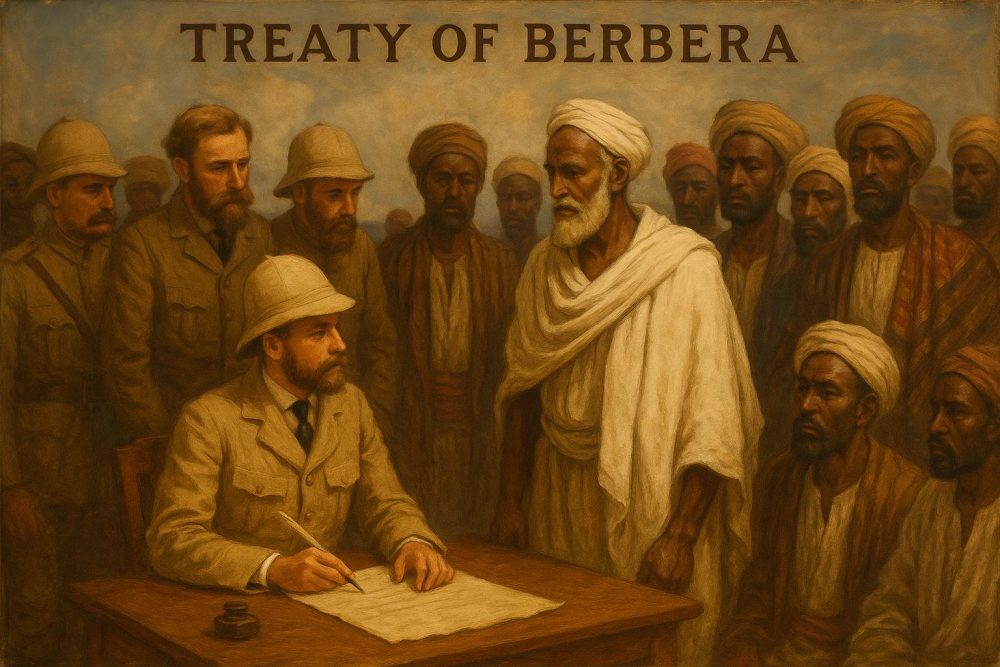
Treaty of Berbera: Historical Context
The Treaty of Berbera holds substantial significance in understanding the historical interactions between colonial powers and the Horn of Africa. Signed in the 19th century, this treaty was pivotal in shaping the political and economic landscape of the region. To grasp the implications and lasting effects of this agreement, it is essential to delve into the intricate web of interests, geopolitics, and strategies that were prevalent during this historical period.
Background and Signatories
Berbera, which today lies within the boundaries of Somalia, was a crucial port city in its time. It served as a central hub for trade and was of immense geopolitical importance. This city became the focus of agreements involving the Somali sultanates, who controlled much of the region, and the major colonial power of the time – the British Empire. As the British Empire expanded its influence along the eastern seaboard of Africa, Berbera was seen as a strategic acquisition that could bolster their presence in the region.
Geopolitical Significance of Berbera
Berbera was not just an ordinary city; it was a strategic location that provided access to trade routes crucial for economic prosperity and military logistics. The port was especially valuable as it lay near essential shipping routes that connected Africa to the Middle East and beyond. These routes were vital for the British, who were committed to maintaining and protecting trade links to their colonies in India and other parts of Asia. The control of Berbera was thus a part of larger geostrategic calculations made by the British Empire.
British Interests in Berbera
The British interests in Berbera were multidimensional. On one hand, the port served as a logistical node that could bolster British maritime operations in the region. This was particularly imperative during an era when naval power was synonymous with global dominance. On the other hand, the presence in Berbera was economically advantageous. It enabled the British to control trade flows and access commodities that were highly sought after in European markets.
Beyond these immediate benefits, the presence in Berbera was consistent with Britain’s broader colonial strategy. By establishing a foothold in the Horn of Africa, Britain could project power across the region more effectively and safeguard their territorial and commercial interests against other colonial powers. This strategy was not only about economic gain but also about maintaining the balance of power in their favor.
Terms of the Treaty
The terms of the Treaty of Berbera were meticulously crafted to ensure mutual benefits, albeit within the framework of colonial hierarchies. The local Somali leaders, recognizing the growing influence of the British and the potential threats from competing European powers, agreed to cede certain trade privileges and allow for administrative oversight by the British. In return, the British provided assurances of protection against external threats, thereby securing a semblance of stability for the Somali leaders.
The system of concessions agreed upon was not uniform across the region. Variations existed depending on the local dynamics and the individual agreements made with different sultanates. Despite these variations, the overarching theme was one of cooperation with a stronger entity perceived as a safeguard against the volatility of the times.
Impact on Local Governance
The treaty set a precedent for the introduction of foreign administrative practices in the region, laying the groundwork for further integration of local systems into the broader colonial framework. This change in governance had significant effects on local political structures, as traditional leaders often had to negotiate their authority and autonomy within the confines of colonial expectations. Over time, these changes influenced the sociopolitical development of the region significantly.
Impact on Trade Dynamics
Trade dynamics within the Horn of Africa were considerably altered by the treaty. Under the new arrangements, the British were able to control the flow of goods, regulate tariffs, and manage the logistics of trade to their advantage. This control was a source of economic benefit to the British but also facilitated the influx of goods and ideas that affected local economic practices.
Legacy and Future Implications
The Treaty of Berbera’s legacy extends well into modern times. By establishing British dominance in this way, it set in motion a series of events and subsequent treaties that would continue to shape the socio-economic and political framework of the Horn of Africa. The colonial infrastructure and governance models introduced during this period had long-lasting effects, influencing everything from political boundaries to economic practices and international relations.
For those seeking a more detailed historical analysis, resources authored by historians dedicated to the colonial era of Africa provide valuable insights. Additional discussions and academic compilations can be found through outlets such as the African History Network, which hosts extensive resources on this subject.
In comprehending the Treaty of Berbera, we gain critical insights into the colonial strategies employed by the British Empire and, more broadly, the lasting consequences these strategies would provoke in the Horn of Africa. Such understanding is crucial for appreciating current regional dynamics and the historical precedents that shaped them. The study of these historical events remains essential in drawing lessons and understanding the complexities of colonial legacies that continue to influence the region today.